
WHY building for yourself is the most important thing YOU can do...
Sean Rappleyea curates today's HopeForFilm's TakeOver.

I’m Sean Rappleyea…
For me, this journey was never envisioned as just another professional ladder to climb. It started as something far more personal with a deep, almost irrational love for film that felt like it was wired into my bones.
For 10 full years before the strikes ever hit, I devoted myself completely to this craft. I pursued the formal education, racked up the crushing costs that came with it, and clawed my way through the relentless, soul-grinding climb despite setback after brutal setback. Year after year I showed up completely by pouring everything I had into the work because I genuinely believed in its potential to matter, to move people, to build something lasting in a world that often feels disposable.
In a post-COVID world, it felt like everything I had spent that decade building simply vanished. The industry I had bet my life on — the one that had already been fragile — shut down theaters, halted productions, and shifted so violently toward streaming and “cost-cutting” that the path I had fought so hard to carve out no longer existed in the same way. Projects dried up, opportunities evaporated, and the entire ecosystem I had invested my 20s and early 30s into looked unrecognizable, and for a while it felt like all that time, all that sacrifice, had been for nothing.
So, like many others in this industry, the 2023 strikes then slammed what little momentum remained to a sudden, dead stop. No safety net, no severance, no fallback plan — just the sudden, terrifying realization that the entire system I had bet my life on could vanish overnight and leave me standing in the wreckage with nothing but bills, questions, and the heavy weight of a decade that now felt erased.
I lived that intensity firsthand. I sustained major initiatives with zero backup options, no rich parents, no studio safety net, and no promises of what came next. I kept going anyway, and I came out the other side stronger, clearer, and far less willing to hand my future over to anyone else ever again. The repeated sting of being undervalued, overlooked, and dismissed didn’t break me — it lit a fire. Those frustrations became fuel and forged a profound, unshakable determination to create something authentic that stares reality dead in the eye with NO illusions, softened edges, or corporate polish garbage to make it palatable for people who don’t actually live this life.
That resolve, born straight from navigating the wreckage of an industry that stopped caring about people like US, is what now propels me forward with total, unyielding purpose to build for myself as the only practical way left to protect the work, protect my sanity, and protect the future I still believe film and television can have.
This is the new direction. This is the only direction that feels honest anymore.
So where are we now?
The year is 2026, and the landscape feels both unsettled and full of possibility. Studios have pulled back from the endless greenlight frenzy of the streaming boom years. Box office numbers are selective with big event films that still draw crowds, but mid-budget projects have largely migrated or disappeared. Streaming services, once in a frantic race for subscribers, are now laser-focused on profitability. Consolidation is happening quietly. AI tools are everywhere, from script analysis to visual effects, lowering the barrier for creation while raising questions about what remains distinctly human. Linear television is shrinking further, yet people are still hungry for stories that feel real, personal, and worth their time.
In the middle of this shift, one truth stands out more clearly than ever and that is that the old gatekeeper model—waiting to be chosen, shaped, and distributed by someone else—has become a fragile way to build a life in this field. Building for yourself isn’t a fallback plan but rather the foundation that lets you move forward with clarity and control no matter what the larger industry does next.
Think about what the future actually looks like when you own your path. Film and television IS evolving into something more fragmented, more direct, and ultimately more personal. Audiences have splintered across platforms, devices, and attention spans, but that fragmentation creates space for voices that speak straight to specific communities rather than trying to please everyone. The creators who thrive won’t be the ones who chase the next corporate trend BUT instead who have already built the relationships, the body of work, and the small infrastructure that lets them keep going on their own terms.
Start with creative freedom.
When you build for yourself, you decide what story needs telling right now, in this moment of cultural flux. You aren’t rewriting scenes to fit a notes call from an executive who may not even watch the final cut. You aren’t waiting for a green light that might never come because quarterly earnings shifted. That freedom lets you respond to the world as it actually is—whether that’s a quiet character study that captures the loneliness many feel in 2026 or a genre piece that speaks to a niche audience tired of the same formulas. The work ends up more honest, and honest work travels farther in a crowded landscape. People can sense when something was made because the creator needed to make it, not because it was engineered to check boxes.
This ownership also creates real sustainability. The industry has shown us repeatedly how quickly external support can evaporate. One studio regime change, one algorithm tweak, one round of cost-cutting, and projects disappear overnight. When you build for yourself through direct audience connections, your own small distribution experiments, or even simple tools like newsletters and community platforms, you create assets that belong to YOU. Your films or series don’t get pulled from a catalog because a licensing deal expired and your skills don’t rust because you’re not waiting for the next gig. Every project you finish becomes part of a living catalog that can generate revenue, spark conversations, and open new doors years later. In a world where AI can generate drafts and visuals faster than ever, the sustainable advantage isn’t speed but rather the accumulated trust and body of work that only consistent, self-directed effort can build.
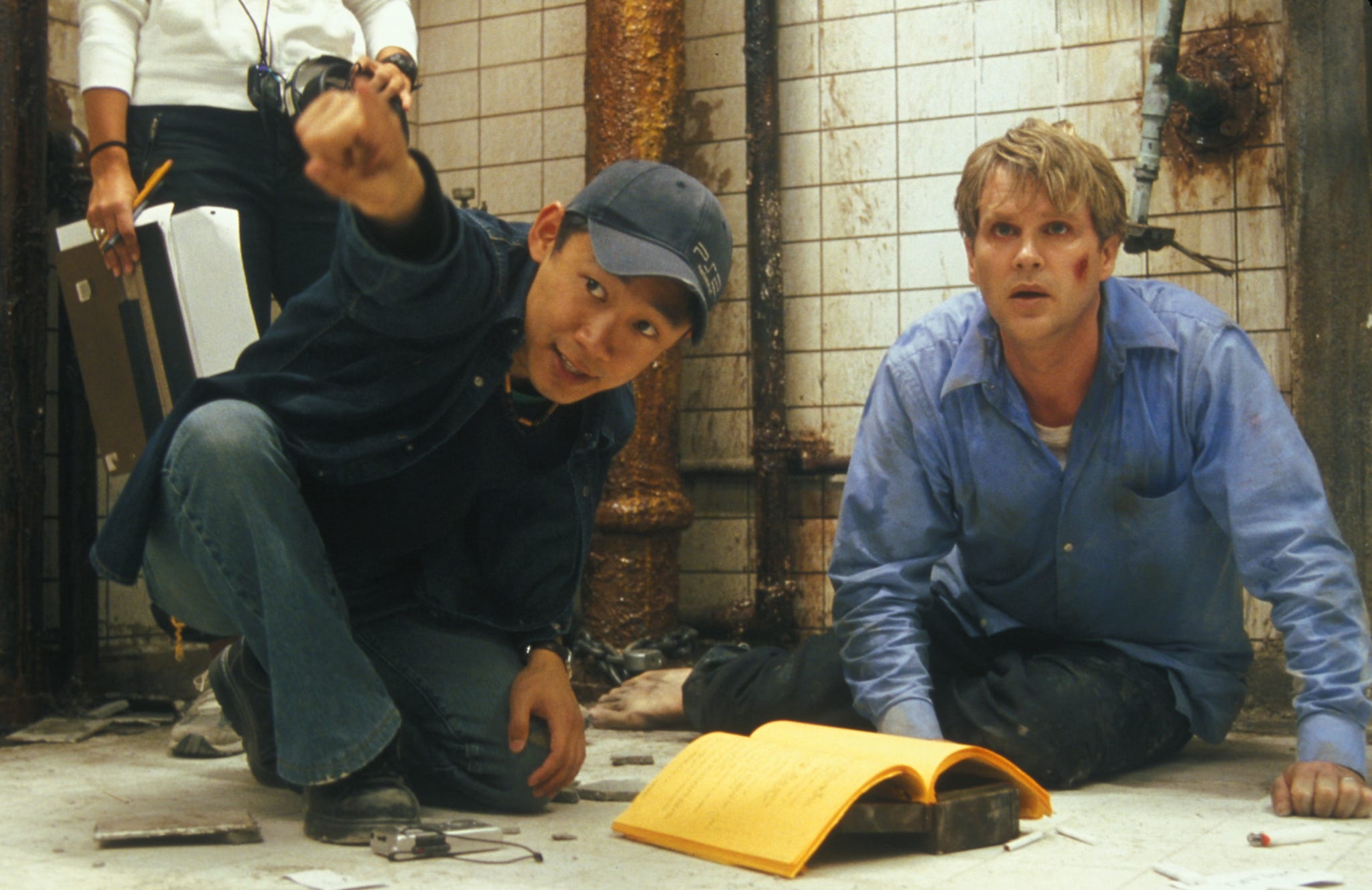
While everyone will be talking about Obsession and Backrooms for the next few weeks, let us not forget Kevin Smith’s Red State — a film he wrote, directed, and self-financed for $4 million before self-distributing it through his own roadshow tour after traditional studios passed on it — or the original Saw, which James Wan and Leigh Whannell shot in just 18 days on a shoestring $1.2 million budget because they refused to wait for big-studio permission, or the ultra-low-budget 2020 crime series Big Dogs, where Liam Neeson’s son Micheál Richardson starred as the lead in a gritty direct-to-audience streaming drama made outside the traditional television pipelines.
James Wan and Leigh Whannell wrote Saw in 2001, couldn’t get it made in Australia, and shot a 9-minute proof-of-concept short to get producers and actors to take the feature seriously. Producers came aboard, formed Twisted Pictures, and financed it independently for around $1.2M, which Wan shot in 18 days. Lionsgate bought worldwide rights at Sundance in 2004 and put it in cinemas after the Midnight reaction, where it grossed $104M and started a franchise that is still running. Wan and Whannell reportedly turned down a $5M buyout and took a backend deal instead, which is two first-time filmmakers choosing to bet on their own film.
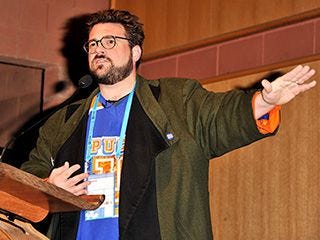
Kevin Smith made Red State after the Weinsteins, who had distributed nearly all of his work, passed on it. He raised the $4M budget from two private investor groups, premiered at Sundance in 2011, bought his own film back for $20 on the stage in front of the assembled distributors, and released it himself under SModcast Pictures. He toured it as a roadshow with a live Q&A, grossing close to $1M on under $500 of paid advertising, including $162K from one night at Radio City Music Hall, before handing VOD and home video to Lionsgate. The tour worked because he had spent 15 years building an audience that would pay $40 and up to see him, and that audience was the asset that made self-distribution possible.
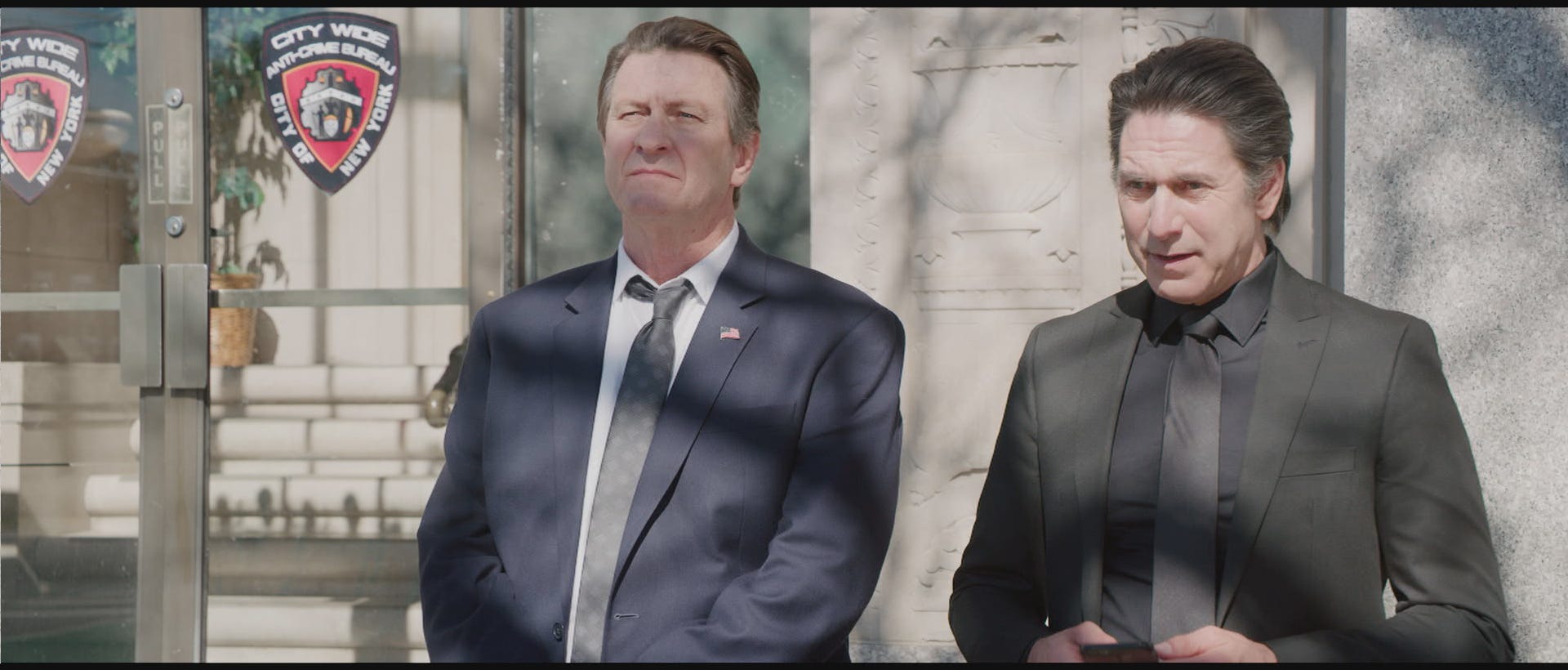
Big Dogs started as novelist Adam Dunn’s books, was adapted by Dunn and was produced independently through Aurelian Productions. Micheál Richardson took his first lead role, and the 8-episode season went straight to Tubi and Prime Video in 2020, with no network in the middle deciding whether the audience was allowed to find it.
None of these 3 skipped the hard part, and none of them waited for the support system to show up on its own. They built something finished and working before they needed anyone’s yes, and they kept enough of themselves in the work that people still talk about it.
The human element matters more than ever in this future.
AI will handle repetitive tasks, generate options, and even help polish footage, but it cannot replace the messy, lived perspective that comes from a filmmaker who has walked through their own life and chosen to turn that experience into art.
Audiences in 2026 are craving that authenticity amid so much synthetic content. They want to feel the hand of the maker. Building for yourself protects that hand. It keeps you close to the work, close to the reasons you started, and close to the people who respond to what you make. That closeness becomes your edge - the thing no algorithm can replicate.
Community grows out of this without much effort. When the work is yours, the audience stops being a passive count and becomes part of the long game. You share the process, you ask questions, you let people in, and over years those relationships become your release network, your first readers, your most honest critics, and your most reliable support. Word of mouth still drives discovery in this field more than any ad buy, and that network outlasts platform changes and lean years because it runs on trust rather than rented attention.
There’s also a quiet effect on everyone watching. Every time a maker chooses ownership over waiting, it shows the next group that handing over your rights and your point of view isn’t the only way in, and it widens the range of stories, because the people telling them aren’t filtered through a narrow read of what worked before. The whole field gets healthier when more of us work from the position of having built something rather than from scarcity.
None of this erases the hard parts, since investment is still hard to find, attention is still scattered, and burnout is real. What changes is that those obstacles stop being someone else’s decisions and turn into questions you can answer for yourself, about what you need to keep going, who you actually want to reach, and what feels worth the effort across years rather than quarters. Those questions lead to clearer decisions, better limits, and a more satisfying creative life.
The joy comes back, too. When the work belongs to you, the daily practice of making it stops feeling like a gamble and starts feeling like a conversation you’re having with the world on your own terms. You wake up knowing the next scene or episode or short belongs to what you set out to do, not to someone else’s shifting priorities, and that alignment carries you through the hard days and makes the good ones feel earned.
Looking further out, this business will reward the people who built something durable. The technology will keep changing, the formats will keep emerging, the distribution tools will keep evolving, and the need for human stories told with care will stay put. The people who spent years tending their own corner will be the ones ready to meet that need without panic, because they won’t be starting from zero every time the market shifts. They’ll already have the audience, the skills, the catalog, and the steadiness that years of showing up for your own work produce.
Building for yourself was never about going it alone. It’s about choosing the relationships and the methods and the pace that let you stay in the conversation for the rest of your career, and recognizing that the business may change shape around you while your ability to make something that matters doesn’t have to wait for permission. In 2026 it’s simply the practical way forward for anyone who wants to keep telling stories that hold up.
The path isn’t glamorous on a daily basis. It asks for consistency, for new skills, for patience when growth feels slow. It also offers the thing the old system rarely could, the steadiness of knowing your creative life is in your own hands. We’re early in a more decentralized, more maker-led stretch of this business, the tools are more reachable than they’ve ever been, and so are the audiences.
What’s left is the decision to build, day after day, for yourself, knowing it won’t guarantee fast success and will guarantee that whatever success you reach is real and lasting and yours. That’s the future I see, not a perfect business, but one where the people who care most about the work are steering their own ships, and it starts with each of us choosing, deliberately, to build.
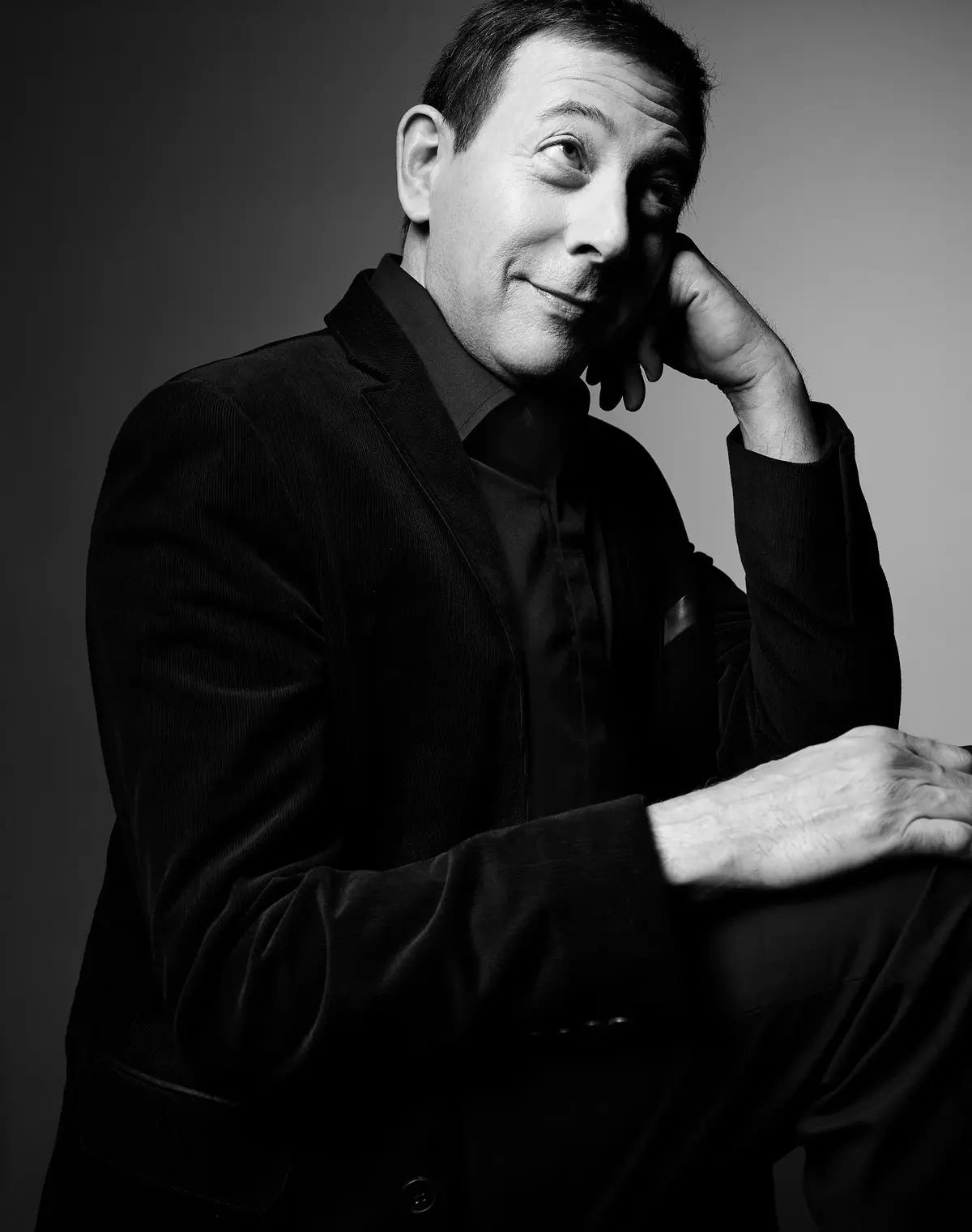
I learned that before I had the language for it.
I met Paul Reubens on Season 2 of The Blacklist in 2014, and over that season he became something like a mentor to me without either of us ever putting the word on it.
The thing he told me that never left was the plainest version of everything above, that you do the work for yourself first, before anyone else’s approval gets a vote. He meant it as the way to stay honest, and he had earned the right to say it.
Paul died in 2023, and it still hurts, and I expect it always will.
The lessons outlived him, which is about the most any of us can ask of the things we make and the things we hand to other people.
So when I tell you to build for yourself, know that I’m passing along something that was handed to me first, by someone who lived it all the way through.
Follow me on this wonderful journey!
Subscribe to me here on Substack
Subscribe on YouTube
Subscribe on Rumble
Sign up for my Newsletter
For more in depth Insights
Follow me Personally on LinkedIn and Business on Linkedin
Follow me on Instagram
Follow me on X
 | A guest post by
|
Nice, Sean.
Great piece. Thank you.