
Palestine 36: "“Today, you must rise to the challenge. We must rise to the challenge.” I said that every day. Then I got up and went to work."
A vHopeful Conversation with the Oscar-shortlisted film's writer/director Annemarie Jacir


Reminder: Today is the day. 1P PT Tuesday Jan 13th.
I am having a public conversation (aka a webinar) with Show&Tell’s Keith Ochwat on NonDē financing. And it is not too late to sign up. It’s free. Register here: https://us06web.zoom.us/meeting/register/sq-q5S-XSdC4lzvoJ-CHXw
Trust me, you haven’t heard this before. Through our collaboration with Keith on INVISIBLE NATION my mind has been opened to a new way of doing things, to a new way of working, and a new way of financing.
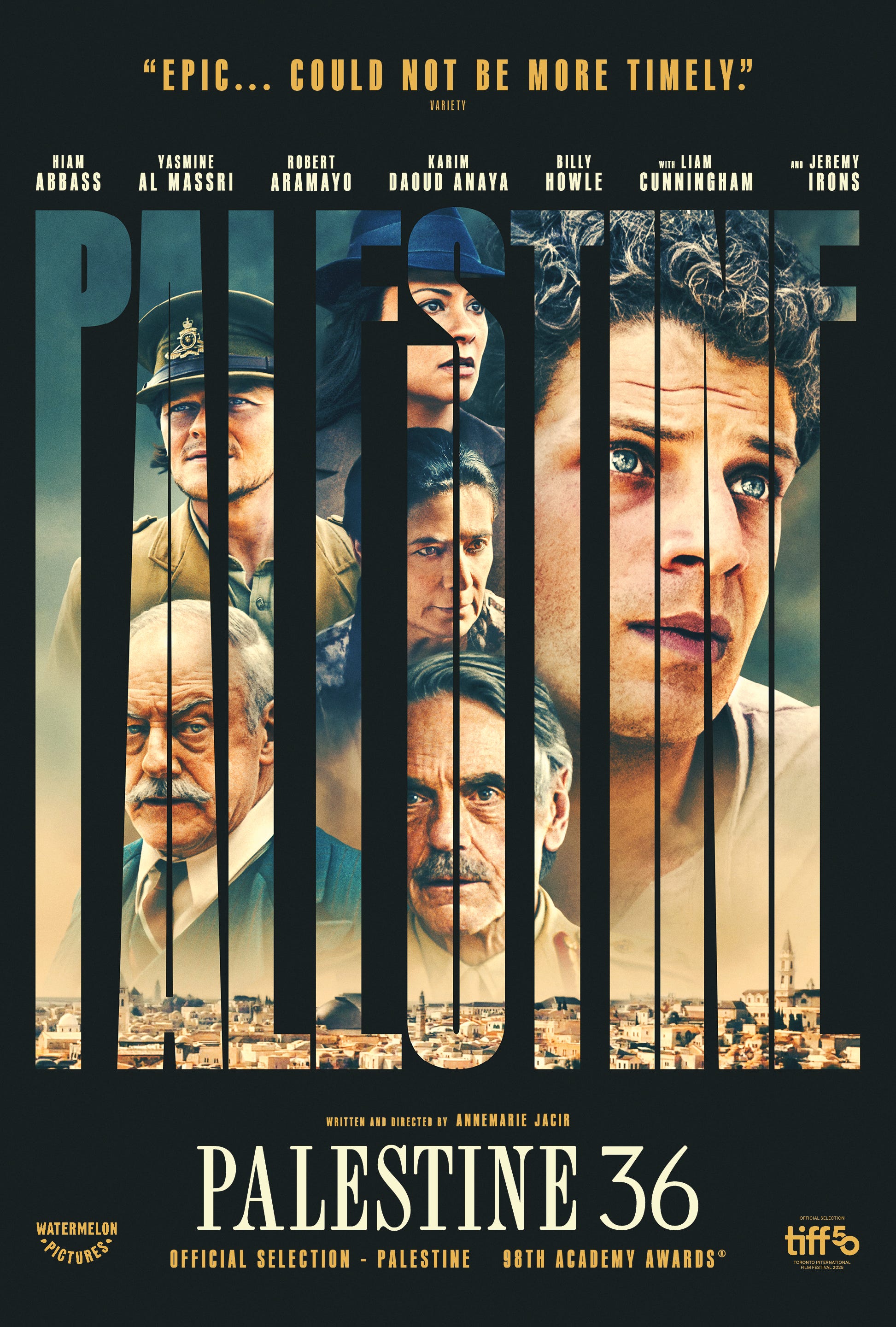
1936. As villages across Mandatory Palestine rise against British colonial rule, Yusuf drifts between his rural home and the restless energy of Jerusalem, longing for a future beyond the growing unrest. But history is relentless. With rising numbers of Jewish immigrants escaping antisemitism in Europe, and the Palestinian population uniting in the largest and longest uprising against Britain’s 30-year dominion, all sides spiral towards inevitable collision in a decisive moment for the British Empire and the future of the entire region.
Transcript is edited for brevity and clarity.
Vanessa: I’m very excited to be joined tonight by Annemarie Jacir, a Palestinian filmmaker whose acclaimed features have played at major festivals worldwide and shaped contemporary Palestinian cinema. Palestine 36 is her first film to reach the Oscar shortlist for Best International Feature, and it’s a beautiful, formally precise, quietly devastating portrait of life under occupation. I started to say “where” at the beginning (off camera), Annemarie, because I was thinking, where are you coming to me from? I don’t know where you are right now.
Annemarie: I’m in a hotel at the moment in California, but normally I’m in Palestine.
Vanessa: Wow, so you’re probably at Palm Springs, which is actually really fun.
Annemarie: Yes. It’s really fun because I’ve screened there before, but I never got to go. It’s beautiful. Really beautiful.
Vanessa: Your film has stayed with me since I had the opportunity to see it. There are no films like it. I wish there were more films like yours—for the politics you’re grappling with, the epic scope and intimate scale, and the feminism of it. It’s powerful and unique. I hope you have the opportunity to make many more movies, and I’m so thankful for this one.
You have a fantastic female lead in your film whose name I’m going to butcher, but I’m going to try: Khuloud.
Annemarie: Yes, very good.
Vanessa: She feels like a new woman of the 1930s—really politically engaged, a working journalist, navigating patriarchy or male supremacy and nationalism. How did you build her character on the page, and were there specific historical women, archives, or texts that inspired her?
Annemarie: I love her too. And Khuloud, who’s played by Yasmine Al Massri, started for me in the archive. I saw, mostly in photographs, Palestinian women of a certain class—women in suits, with cigarettes, posing and having fun. They’re playful images.
I have a family photo from the 1930s where everyone is lined up for a big group picture, and there’s this couple in the back—my grandfather’s relatives—and she’s leaning on him in this very cool, mischievous, independent way. Images like that came first.
Then I was reading about the period and learned that there were many female journalists in Palestine, Lebanon, and Egypt who wrote under male names. One reason was to be taken seriously, to have their articles treated seriously, and another was safety: they were writing under colonial governments, and it was dangerous to be a journalist. Using another name was a form of protection.
There was also a real socialite in Jerusalem, an upper-class Palestinian woman who moved a lot in British circles, hosting parties and living that colonial social life. Out of all that, Khuloud started to be born on the page.
Vanessa: It’s wonderful. I’m so glad you mentioned the suit, because that opening image of her at the typewriter at the desk is fantastic. She stays with you, as she should. She pulls you in; she’s someone we really want to understand and be with.
You have a vast range of characters from different classes, and you have extraordinary empathy for all of them. Her husband, for example…
Annemarie: Thank you. And Khuloud—Yasmine really embodied her. Once she came on board, she became obsessed with Khuloud. She told me she’d never had a character she loved so much. That’s the magical part when an actor breathes life into a character.
Vanessa: Absolutely. In your movie you capture a whole world and a marriage. Her husband is never a simple villain. He’s charming and modern and relatable, even as he betrays people. That betrayal is revealed slowly and carefully, and it’s powerful because it says so much about the personal and the political.
How were you thinking about portraying that kind of class betrayal and collaboration, without turning him into a caricature?
Annemarie: It was important that Amir was charming and attractive, someone you’d want to be around. Khuloud chose him; she’s with him. If he were obviously pathetic, the cliché collaborator, she wouldn’t believably be with him. I didn’t want that.
I wanted a marriage where they’re growing in different directions, but it’s not immediately clear. Otherwise she would never have married him, or she’d have left long ago. And it’s the 1930s—it isn’t so simple to leave. It takes her time to get there.
Ziad Bakri, who plays Amir, really has that charm. We talked a lot about not judging the character. Amir maybe has a big ego and wants to be important; he’s lacking something. I suggested that perhaps he’s not of the same class as Khuloud—she’s old money, he’s newer money—so he has something to prove to her and to himself.
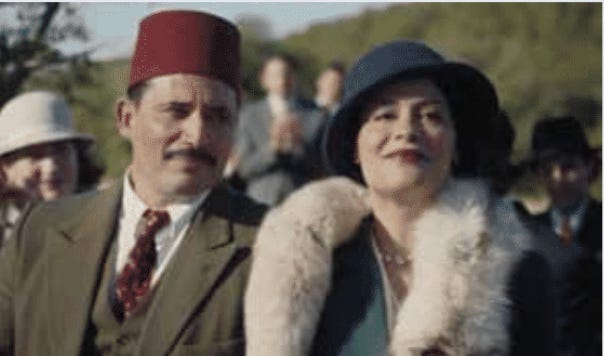
And he doesn’t know what these small choices will lead to. No one in 1936 knows that in ten years Palestine will be gone for them—that he becomes a refugee, Khuloud becomes a refugee, and they lose their home and neighborhood, which will be completely ethnically cleansed after 1948. From where he stands, it’s just “a little business, a little bit of this.” It doesn’t look like it will become what it becomes.
Vanessa: It’s like the metaphor of frogs in boiling water. Especially in the United States right now, many of us feel the water is boiling and we don’t know whether we’re all going to die, whether we should jump, what to do.
You portray that sense of little decisions and hope—wanting to have faith that the system might be fair if you just play along a bit. It’s understandable, and it’s awful.
Annemarie: Yes. And that’s his modern side—embracing “modernity.” Why not move forward? Why stay stuck in old ideas? The question is: when do you lose yourself in that?
Vanessa: You show this huge contrast between urbane, sophisticated upper-class city life and the farms and rural landscape. It’s an epic film; it’s really a masterpiece. You manage sweeping exteriors and huge crowd scenes alongside intimate moments and personal relationships. I’m in awe.
How did you work with your cinematographer, and in the storytelling, to manage that scope?
Annemarie: It was a lot—many cast members, many locations. Hélène Louvart (cinematographer of such films as La Chimera, Invisible Life, Never Rarely Sometimes Always and Palestine 36) and I prepped everything carefully. One key idea was to treat the land itself as a character, the constant that connects all these people in an ensemble film.
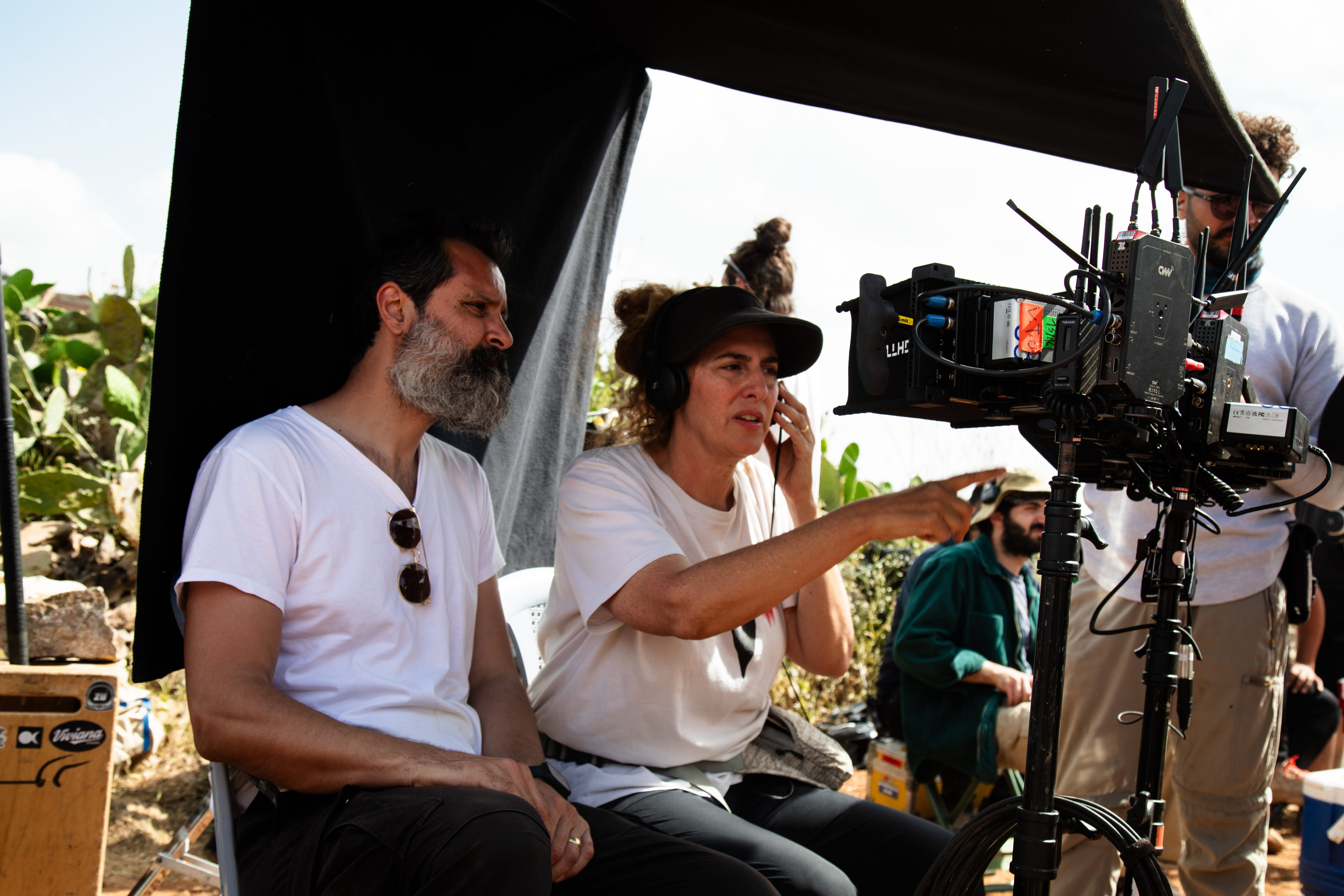
We wanted a different feeling and look for the village versus the city—different camera language and color—so that each space feels distinct and attractive in its own way. Yusuf is drawn to the city; he wants to leave his village and is very attracted to that lifestyle, and slowly realizes he’ll never truly belong to that class.
We explored color and space a lot, even within the house: spaces that belonged to Khouloud, spaces that belonged to Amir, darkness and light, the places where they meet. That was a big part of the work with Nael Kanj, the production designer.
Archive was crucial too, because we were rebuilding a world that has been destroyed. Our production office walls were plastered with photographs; for nearly every scene, we found a historical photo that corresponded to it. We told the film’s story through still photographs while we built. Many villages in Palestine were destroyed, so that also guided the construction and look of the places.
We did a huge amount of prep to walk the line between authenticity—how things really looked—and freedom, because we’re working in fiction. I work in fiction because I like that freedom.
Vanessa: Yusuf, as you mentioned, is a fantastic character. He comes from the village but works as a driver for Khuloud and her husband. He’s caught in between, and you really feel for him and for what’s happening to the villages, how people are forced into horrific positions. There’s no mild way to say it—it’s brutal.
Annemarie: Yes.
Vanessa: It’s behavior shaped by imperialism and absolute male supremacy. It’s horrific, and it keeps repeating; we’re still living with it.
Annemarie: Yes. It never ended, I think.
Vanessa: No. And you make that so clear and emotional. It’s such a powerful film.
We’ve spoken a little about time and place. Making a period film is so challenging. You’re working with photographs and your production designer, costumes, period detail; you’ve talked about language and the presence of the British…
Annemarie: Language was very important. We have British characters speaking a kind of English people don’t speak anymore. For the Palestinian characters, they’re all from one village, and in Palestine every village has its own dialect.
So we recreated a dialect. Every actor from the village worked with a dialect coach. It’s not only a different dialect, but also period language: words used in the 1930s that nobody uses today, even in Palestine.
Then there’s the city—the Jerusalem accent—because neither Khuloud nor Amir is from Jerusalem originally.
We focused on making the world alive for the actors, not just doing straight-up rehearsals. Saleh Bakri, who plays Khalid, had horseback riding lessons for months, almost a year. Thomas and Khuloud had dance classes. Yasmine had typing lessons on a period typewriter. In the village, actors learned how to bake bread, hang tobacco leaves, work with their hands. A lot of that never directly appears in the film, but it becomes part of their identities.
Vanessa: You really put us there. The scene where the British “good mediator,” this rare seemingly well-intentioned figure within the colonial regime, tries to talk with the village elders about giving their land away—it’s devastating. They explain that their steppe farming has been going on for thousands of years; it’s not something you can just give away. The misunderstandings in those negotiations, and the lack of true goodwill, the sense of superiority and dominance—it’s horrifying.
You give us so many layers and so much complexity; there’s no film like it, and we needed it. I don’t even know how you imagined you could take on such a huge canvas.
Annemarie: Thank you. That scene makes me really sad. I wrote it, and later, on set, when Billy Howle, who plays Thomas, was saying those lines, I suddenly felt very sad. Because what he’s saying—people believed it. We believed it. And we know now that things turned out very differently, and they didn’t have to, but they did.
Vanessa: Exactly. You feel the contrast between cultures and ways of life and you think, if only we’d seen clearly who was actually more barbaric in their methods—who treated human beings as less than equal. There could have been another way. Your film lets us feel that possibility and the tragedy of it.
You’re not one to shy away from challenges. You’ve broken ground as one of the first Palestinian women to direct narrative features. From a producing standpoint, taking on a period political drama set in 1936 Palestine is no easy feat.
How did you get it financed or off the ground, in ways you can share, for other filmmakers who might be afraid to take on such challenges?
Annemarie: Honestly, I wasn’t thinking in those terms at first. I didn’t want to think about what we couldn’t do. I wrote freely and didn’t think about money or financing. I told myself, “We’ll deal with that later.”
When “later” came, it took years—seven or eight years—to finance the film. It was huge for us, especially because we don’t have institutions in Palestine that financially support cinema. My producer and I spent years pitching the project, meeting people, writing applications. It was exhausting.
There was a moment with a European producer we spoke to—someone we didn’t end up working with. He said, “I read the script and I don’t understand. It’s really good, but why does Annemarie want to play with the big boys?”
He literally said that. My producer asked, “What do you mean?” And he replied, “War and this kind of film—it’s not really… She’s better with the small things. Wajib was in a car. That was great. But this isn’t really a ‘female film,’ is it?”
I heard that a lot—that this wasn’t a “female film.” But of course it is.
We eventually had support from institutions like the British Film Institute, BBC Films, a French coproduction, and major support from the Arab world—Doha Film Institute, Red Sea Film Festival, and others. The credits are long for a reason.
Vanessa: It’s so important that it’s a woman telling this story. We need a female perspective on war. There’s so much more nuance than when “the boys” handle this subject matter and sometimes turn it into something stylish or “cool” about shooting people. It’s insane.
Annemarie: Exactly.
Vanessa: I was pleased to see all the British support, because it made me feel that they understand their responsibility in Israel–Palestine—that they have a debt and want to support you, to back your voice in telling this story and showing what they did, honestly, in terms of class, military power, and betrayal. The betrayal they’re responsible for is huge. It felt good that they were backing you. It took long enough.
Annemarie: They were very clear. The executives behind the project said, “It’s time we face our colonial past. It’s time we talk about it.” They recognized this is a point of view they hadn’t had before and that it’s important to support it.
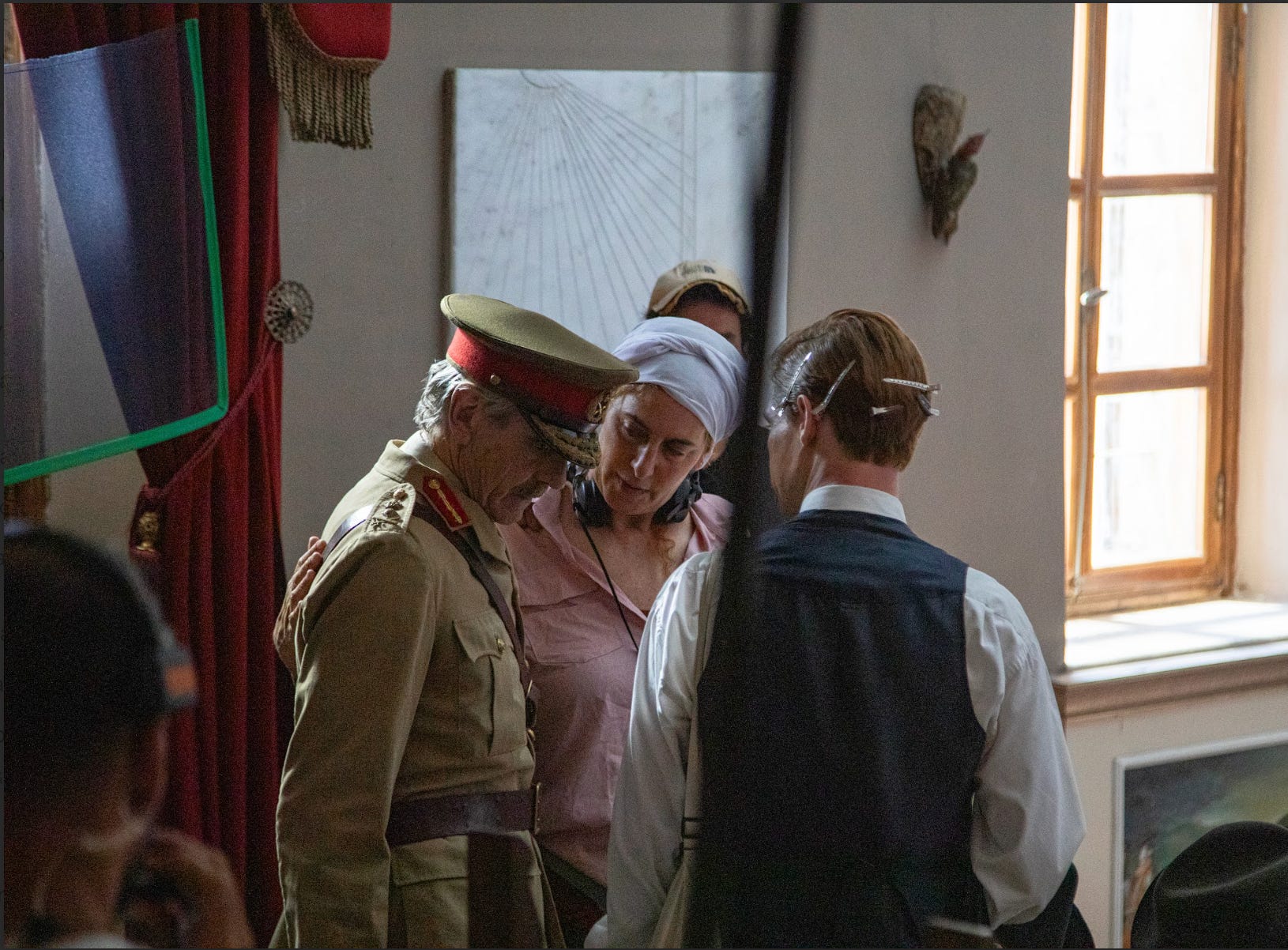
They stayed with the project even when we had production problems. They hung in there. My British cast also said repeatedly, “We don’t learn any of this. None of this is in our education system.” It’s not just Palestine; many places that experienced British colonialism are missing from what’s taught. So that support was meaningful.
The main bulk of the financing, though, came from private investors—from our community. People who wanted to see this story on screen and knew it would never be made otherwise. That was really important.
Vanessa: And are you pleased with how the film is being received? Making the Oscar shortlist is great, but are audiences engaging as they should? Are they learning a history they were never taught, seeing it depicted at such a high emotional and political level for the first time?
Annemarie: I’m very happy with how it’s going. The UK was the first place we released theatrically. We’re going into our 11th week in cinemas, which is amazing. Every time I go to a screening there, I feel a lot of love from the audience.
It’s a very tough film for the British to watch, and I honestly thought, “They’re going to hate me.” But it’s been really good. I’m sure there are people who won’t go see it, but 11 weeks in, it’s still playing. We’ve had beautiful screenings and a lot of young people—eighteen-year-olds—some who know the history and some who don’t.
At the last screening I attended in London, something extraordinary happened: the niece of the real man on whom Thomas is based—Billy Howle’s character—was in the audience. I had been reading his diaries and writing the character, but I didn’t know the family.
During the Q&A someone asked, “Has the family of the real Thomas seen this film?” And she stood up and said, “I’m here. He was my uncle.” I was terrified, hoping they were okay with it. She said, “Thomas would have loved this film. He loved Palestine. He was deeply affected by his time there.”
The real man went there as part of a colonial project, realized it wasn’t what he’d been told, and left. He became a Marxist. She added something even more beautiful: he spent the rest of his life as an anti‑colonial activist, deeply shaped by what he witnessed in Palestine.
Vanessa: Wow. That’s incredible.
As a director and writer, how do you persevere? This story is clearly close to you, but is there any advice you’d give to other artists or filmmakers about persevering and holding on to hope, the way you do with this beautiful work?
Annemarie: I think hope is a practice. These days it’s very easy to feel hopeless—the whole world, not just Palestine, feels dark. So I see hope as something you work at.
It’s important to think about your privilege and recognize it. When we were shooting, that was always in my head: we’re not in Gaza. We are here. I have a roof over my head. My child sleeps in a bed and has food. Telling this story is a privilege.
I thought a lot about people in Gaza. You see terrible images of destruction, but also images of people sitting together, playing music, telling jokes—insisting on living. For all of us—the cast and crew—that was always present. If they have hope and keep living, then we must follow their example. We do this for them and because we’re learning from them. They’re teaching us.
There were days I lay in bed and told myself, “Today, you must rise to the challenge. We must rise to the challenge.” I said that every day. Then I got up and went to work.
Vanessa: Yes. Given how you’ve described yourself as being in community with older generations, younger generations, and the people you’re making the film with and for, I want to share something that was in the back of my mind while watching your film. It’s a bit embarrassing, and I can always cut this if it feels wrong later, but I’ll be honest.
On my mother’s side, her father’s family were German Jews. They were among the first to write against Hitler and among the first who had to flee.
On my father’s side, the reason your film’s time period was so especially fascinating to me is that I’ve never seen 1936 Palestine on screen. But I’ve always been curious about it, because my paternal grandfather’s mother, Amy Phipps, was from a very wealthy American family. In the 1920s and 1930s, they traveled the world. I have the original archive and photo albums from their travels.
A famous story my father told was that Amy Phipps, who was a Christian Scientist, thought she could help negotiate peace in Palestine. She was apparently driving her car back and forth, trying to further negotiations. My father would tell that story half-mockingly.
Seeing that period through your film was especially fascinating because I’d only ever heard that anecdote. I don’t know if you’ve ever come across her; I probably need to research her properly. But watching your film gave me a visceral sense of the reality behind that family legend.
Annemarie: That’s fascinating. You probably could find something. I came across a lot of random things in my research and followed many threads.
For example, there was a British woman who was a schoolteacher in Ramallah. Reading her diaries—her trips back and forth, seeing rebels and British soldiers—was very mundane on the surface, but incredibly impactful for me in understanding that world.
Characters like the ones you’re talking about—people involved in major historical moments—were there. The Peel Commission’s secret testimonies were recently released; there are many names in there. They barely spoke to Palestinians, as usual, but there’s still a lot that’s revealing, including names and details. I bet you could find traces of your great‑grandmother in some of that material.
Vanessa: Thank you. Maybe I will.
Postscript: I quizzed family after speaking with Annemarie Jacir and was reminded that Amy Phipps Guest attempted to broker a meeting between Nasser and Ben-Gurion. (Gamal Abdel Nasser (Egypt) and David Ben-Gurion (Israel)) But this is not in the public record, only personal family archive I need to mine.
Annemarie Jacir has been a pioneering voice in international independent cinema since 1998, with award-winning films that have premiered at Cannes, Berlin, and many other festivals. Her short like twenty impossibles (2003) was the first Arab short selected at Cannes and won more than 15 international prizes. She broke ground with her debut feature Salt of this Sea (2008), the first by a Palestinian woman director, which became Palestine’s Oscar submission. Her follow-up When I Saw You (2012) also represented Palestine at the Academy Awards and won Berlin’s NETPAC Award. Jacir’s Wajib (2017) was showcased at Cannes and earned acclaim worldwide. A co-founder of Philistine Films and the Palestinian Filmmakers’ Collective, she is also a founder of the Dreams of a Nation project and has taught at Columbia University, Bethlehem University, Birzeit University and refugee camps in Palestine and Lebanon. Selected as Zhang Yimou’s protégé for the Rolex Arts Initiative, Jacir continues to shape Palestinian cinema with her latest feature Palestine 36.
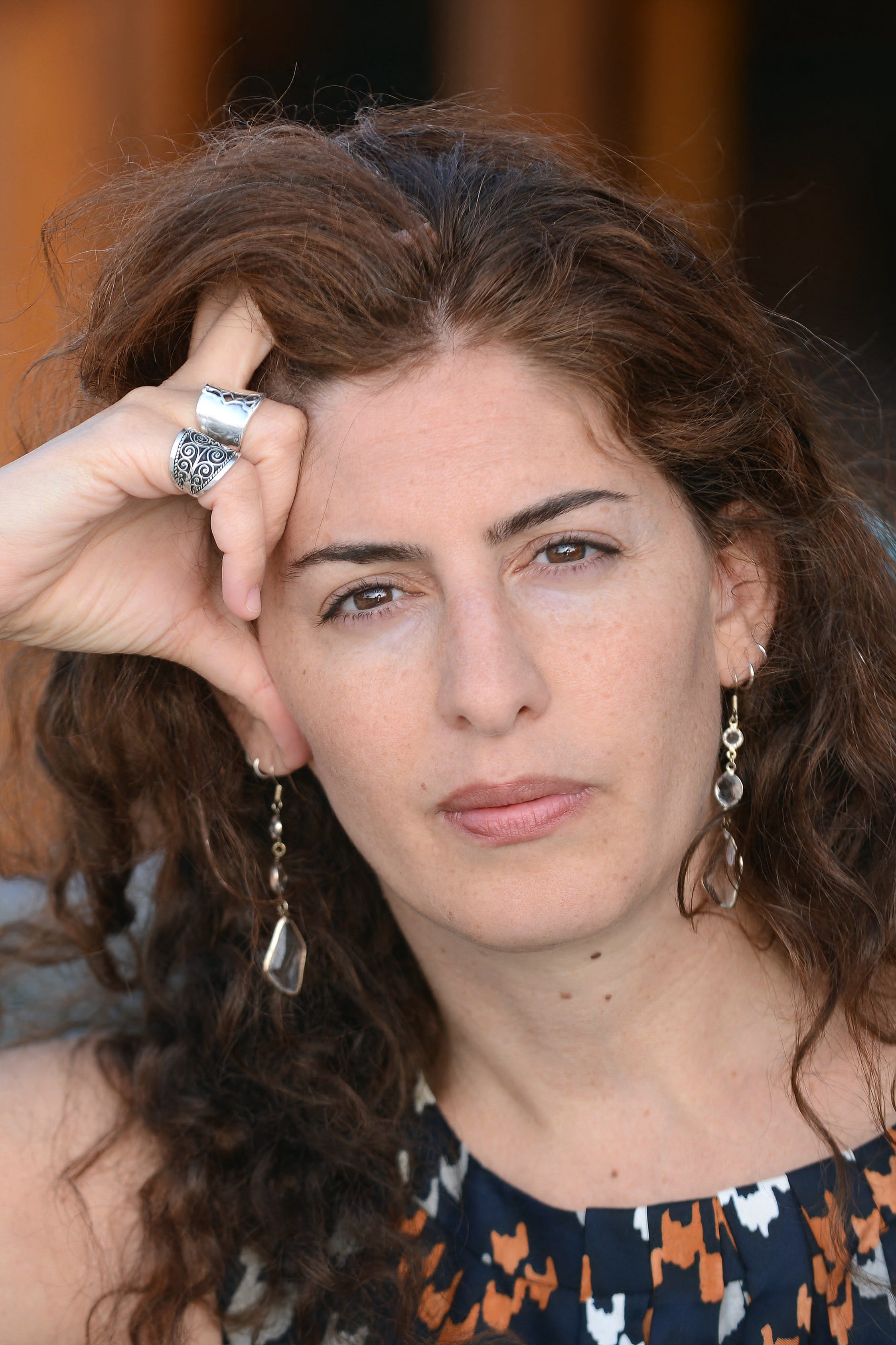
Palestine 36 opens in LA and NY on Feb. 13 at Laemmle Royal in LA and Angelika Film Center in NY. The nationwide and Canadian rollout will be later in March.
For more information on where to see the film and hear Annemarie Jacir in Q&A go to the website for Palestine 36.
It is no accident it has won many awards already!
Oscar Shortlist, Best International Feature
European Film Awards Short list
AFI FEST
Arab Film Festival - WINNER (Audience Award)
Asian World Film Festival - WINNER (Snow Leopard Special Jury Prize)
Austin Film Festival
BFI London Film Festival
Black Nights Film Festival
Bosphorus Film Festival
Cinebaix
Chicago International Film Festival
Chicago Palestine Film Festival
Denver Film Festival
Doha Film Festival
Fajr International Film Festival
Festival de Cine por mujeres de Madrid
Festival du Film Arabe de Fameck
Hawai‘i International Film Festival
International Film Festival of Kerala
International Film Festival Rotterdam
Janela Internacional de Cinema do Recife
Kolkata International Film Festival
LatinArab International Film Festival
Marrakech International Film Festival
Montclair Film Festival
Mosaic International Film Festival
Mostra Internacional de Cinema de São Paulo - WINNER (Audience Award)
Orcas Island Film Festival
Palm Springs International Film Festival
Red Sea International Film Festival
Rome Film Fest
Santa Fe International Film Festival
The International Independent Film Festival of Bordeaux
Thessaloniki International Film Festival
Tokyo International Film Festival - WINNER (Grand Prix)
Toronto International Film Festival
Valladolid Film Festival
Vancouver International Film Festival
Thank you for the link to the Financing Show & Tell. Will there be a recording available of the session after the fact? I can't make the time work but I wish I could join!