
How To Get Creative Again
Alex Bailey of DIY Golems stages a non-violent takeover of Hope For Film.


Welcome to Ted Hope’s Substack. I’m…well, not Ted Hope.
My name is Alex Bailey. I write a substack called DIY Golems, which I cheekily refer to as ‘artisanal rants’ - essays about Film, TV, storytelling, writing, Non-Dē, learning to cook, magic and the way these are all, in my head, one thing. I’ve been an assistant to a partner at a talent agency, a showrunner’s assistant and director’s assistant on two Emmy-nominated streaming shows, a script reader for The Black List and a PA in charge of Jayson Tatum’s rider.1 If all goes well, I’ll also be shooting my first feature, WHERE DOES DAISY GO WHEN SHE’S NOT WITH US?, later this year.
I’m immensely grateful to Ted for giving me the chance to share some thoughts with his audience, and for all the work he’s done. Ted is the big shining light of this space, the reason I joined up, someone charting a real future for people who work in this industry and want it to be healthy, humane and great. To know he’s read my work is astounding. To be asked to write something here? Unfathomable.
And now…on with the show.
One of my convictions is that we, as a filmmaking industry, have failed to connect to today’s audiences. We have optimized phones out of our stories, fetishized the 70s to the detriment of contemporary artists, failed to widen the range of our influences and stopped making the many types of movies we once did. In other words? We’ve thrown up our hands and said ‘dammit, they just don’t like us!’ rather than taking new approaches to making the audience like us. Last century, when Hollywood was afraid of television, we developed bigger formats, like VistaVision and CinemaScope, that TV just couldn’t compete with. This century, when Hollywood was afraid of YouTube and TikTok, we…
Well, we made Quibi.
We’ve all read a million think-pieces about what’s wrong - I was mid-way through drafting this essay last week when Emily Best put it this way in her must-read takeover of Ted’s Substack:
“You know what’s broken. We all do. And I swear if I have to sit through one more panel about what’s broken, I will scream.”
So let’s move past that. We all know what’s wrong. The question is how do we get back? How do we put ourselves in the headspace to come up with solutions that aren’t the same-old-same-old, tried-a-million times? How do we - as problem-solvers - get creative again?
I’m reminded of one of my favorite videos from the great Tracy Letts. I went through an intense Letts phase in college, read everything I could find, even wrote a whole play blatantly ripped off of MAN FROM NEBRASKA.
So, without further ado…Tracy Letts’ rules for how to live a creative life:
Today, I’m going to steal from Tracy Letts again. We’ll call them ‘Alex Bailey’s Rules For How To Get The Film Industry’s Creative Mojo Back’.2 These aren’t solutions for our ills - they’re ways to train ourselves to better find those solutions.
1
Learn To Cook
I think only two other industries really understand life in entertainment: restaurants and the military.3 These are fields where the hours are long, the work is grueling, you develop a closer-than-family bond to people you’re in the trenches with. Sometimes the ask seems impossible - but you do it. You figure it out.
Learning to cook has been one of the most important processes in my life because it engages every aspect of your mind and body. Cooking can be athletic, intellectual and creative all at once, just like a film set. You’re out of this, out of that? Well, you need to figure out a creative solution. Your location was washed out by rain today? Well, time to rewrite the scene. And fast.
In both cases, you hopefully come out with something better than what you went in with - the goal is to combine the structure of a recipe with improvisation. If you can make magic in the kitchen, there’s no reason you can’t do so on a film set.
What’s more, cooking is the ultimate DIY, Non-Dē art. I will never forget the mid-pandemic moment when someone taught me how to make fried rice. This may sound ridiculous, but I’m from a small town in suburban Massachusetts - no one just made fried rice. People made pizza, people made pasta, people made corned beef and cabbage. But fried rice?! It blew my mind that something like that was possible in my tiny Brooklyn apartment, the same way Donny Broussard’s Micro-budget Case Studies consistently blow my mind. In cooking, as in film, you can make so much from so little.
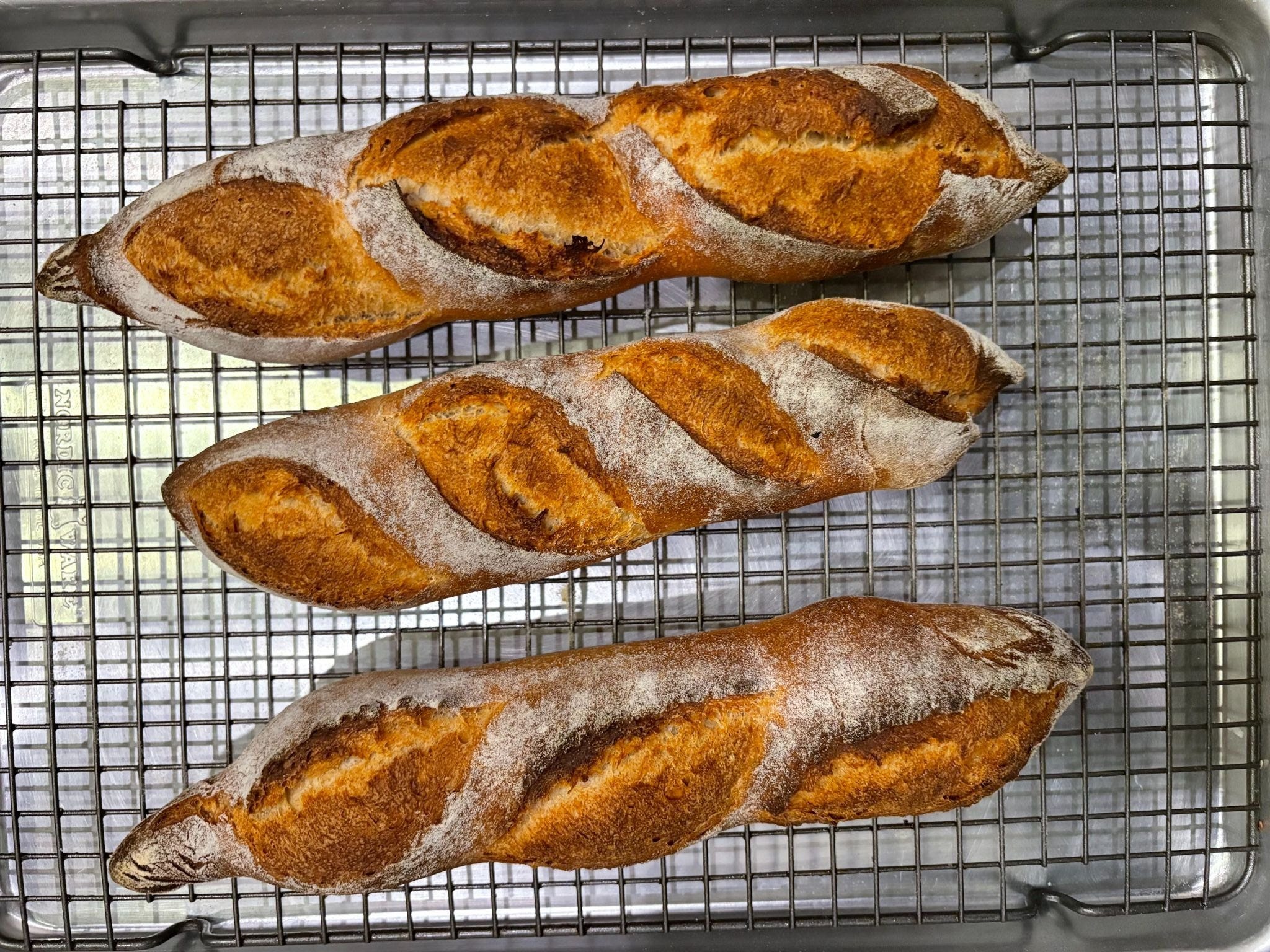
When I bake bread, I’m not thinking about bread - I’m thinking about the passage of time, craftsmanship and making something that nourishes people, all things that are vital to creating a film-making community. When we rely on platforms like DoorDash and GrubHub, I worry we’re losing hold of all that. And it doesn’t take much to figure out how that metaphor carries over to the film industry.
If we can rediscover how to cook, there’s no reason we can’t rediscover the craft that led to a million non-dependent, visionary films.
2
Study Film History
I joined Letterboxd in December of 2015, one of many reasons I pledged to support the campaign to buy Letterboxd that Ted and the good folks at the Intrinsic Entertainment Collaborative have been agitating for. It’s been over a decade that I’ve been marinating in the reviews, recommendations and passions radiating from that platform, and it has benefited me immensely.
We’re all the sum of our influences. Who we are as artists and workers in an artistic ecosystem is, nine times out of ten, a product of the art we consume. For all the options that streaming has brought us, all the access that having every movie in the world at our fingertips has brought -
Well, that’s the thing. We don’t have every movie at our fingertips. Log into Netflix4 and open up the ‘classic movies’ category. When I do, I find very few movies older than 1970. How can you build a film ecosystem, a film industry, that doesn’t remember more than 50 years of its history?
When you study film history, you’re not just watching damn good movies - though, yeah, there’s a lot of that too. You’re learning about the ways people in the industry confronted familiar problems, about the evolution of style, about the structure of the business then and now, about the choices that change that structure. Studying film history, on Letterboxd or elsewhere, has only ever made me a smarter observer of the industry and the art-form.
If we all knew more about the silent era, about the ‘Golden Age’ of Hollywood, about the actual firmament of our industry…well, I believe we’d all be able to make better films, and a better film industry too. Look no further than Sasha Santiago’s recent piece about Mary Pickford and her role in co-founding United Artists. Understanding our past is vital to making our future.
3
Drink.
I’m kidding. Kinda. What I really mean is…
3
Get Out There.
I set aside time, once a week, to go to my local bar and write for a few hours. No matter what’s going on - no matter how desperate my finances, how busy my personal life, how many obligations are piling up - I head to the pub up the street on Sunday for a few hours that belong only to myself.
When I’m there, I’m trying to focus on my work and my stuff, sure. But I’m also taking in everything around me. Some of the best, most interesting stories I’ve ever gotten, ever written, come from things I overheard while sitting in the corner of a bar.
I was in a cigar bar in New Haven, Connecticut once when a guy next to me started chatting me up. He was there with his girlfriend and, after a few drinks, he elbowed me and gestured at her. “How hot is she?” he said. “I mean, isn’t she fuckin’ beautiful?” I nodded a bit, unsure what response he was looking for. He narrowed his eyes. “So tell me,” he said. “Do you think she could do porn?”
Can’t you imagine that as the start of a movie? So many of our movies today - so much of our industry today - are focus-grouped to death. They’re the products of meetings, not of genuine experience. They don’t speak to real people. Go to your local bar or coffee shop or library and see what you see. The stuff of inspiration, the stuff that’s going to make movies feel vital and real and relevant to today’s audience? They’re right there, if we would only go out into the street and find them.
I think every studio executive should be required to go to their local watering hole at least once a month - no comped drinks, no private rooms. Just you and a few people you may not know or agree with, potentially with a social accelerant like alcohol involved. If you do that, you’ll meet your audience and come to understand them better. If you do that, you’ll inevitably encounter some damn good stories that would make for a helluva movie.
4
Do Something Ill-Advised.
Richard Rushfield, who I’ve been reading ever since, as a young agency assistant, I heard John Slattery ask “You ever heard of this thing called The Ankler?,” has written extensively about how our leaders have accountant hearts rather than the kind of tolerance - even desire - for risk that once defined the industry. I’m repeating myself but we have become an industry more interested in focus groups than artists.
How do we get out of that? I think we need to do things that are, on their face, so obviously ill-advised that they might actually turn out to be good.
Think about it - we make sequels because they’re safe. We cast the same people because they’re safe. We send our stars on the same pre-approved, pre-planned PR tours because they’re safe.
What happened to us? Hollywood was once capable of provoking a moral panic, like the Fatty Arbuckle trial, that swept the country. Kenneth Anger’s HOLLYWOOD BABYLON is a pack of lies - but the world believed it because Hollywood was a place for wild risk and reinvention and renegade chance. We may not have been Babylon - but we sure weren’t the accounting office around the corner.
During the strikes, a lot of people asked where our Lew Wasserman was. I often find myself wondering where our Robert Evans is.5 We need leaders willing to do things that, on their face, seem ill-considered - because, sometimes, they turn out to be THE GODFATHER. I’m consistently arguing that we should embrace what seem like our worst ideas - because they often turn out to be our greatest opportunities.
5
Our Work Is A Gift.
When I was in college, I fell asleep studying and had a dream. I was in my childhood Barnes and Nobles, book in hand - it might have been the latest Harry Potter, which often came out around my birthday. I looked down at that book and thought ‘Oh my god…someone made this for me.’
When I woke up, I felt an immense sense of joy and purpose. I was going to make things for people. That was what I was put here to do. I was going to give gifts.
We do this, all of this, for people. We don’t do it to make money - I’ve said it many times but every film producer is more than qualified to work at McKinsey - or to bolster our own all-too-often brittle egos. We don’t make a product people take home and clean their houses with. We don’t make trophies to flaunt on Instagram.
Films and TV are for people. They’re gifts for those who need them. They’re…well, they’re a whole lot like cooking for someone you love.
We need to never forget that. This work is a gift. We do it for both the audience and the people we get to employ and give opportunities to.
There is a certain solipsism to so much film these days. We’re making it for bottom lines and balance sheets and investors. But that’s not what we do. We don’t make products. We make experiences. In MANK - a movie I, both an Orson Welles partisan and Fincher fan, have complicated feelings about - Louis B. Mayer says this:
“This is a business where the buyer gets nothing for his money but a memory. What he bought still belongs to the man who sold it.”
Sure, you can read that as a broadside in favor of the crassest capitalism. But I think it’s our responsibility to make it more. It’s business, sure, but it’s show business. We’re giving people a memory - our crews, our audiences, our selves.
How sweet a memory it could be, if only we’d remember that it’s our job to give.
Thank you for reading.
1 Buffalo Wild Wings and several flavors of Gatorade. He was on set for maybe an hour, didn’t touch a thing and, yes, that was my dinner.
2 Yeah, bit wordy. I’ll work on it.
3 Is it any wonder that the structure of restaurants, the French brigade system, is based on Auguste Escoffier’s experience in the military?
4 Full disclosure: I have worked on a Netflix show and adore plenty of what they produce, so take my quibble with a grain of salt!
5 I know I started this by saying we should all idolize the 70s less. But, I mean…come on, it’s the 70s!
 | A guest post by
|
This is very refreshing reminder that life experience is what informs our writing and imagination and perspective.
I love this wayy too much