

Hello people who Hope.
I’m Tomas. My substack is Little Scraps of Filmmaking.
I write about all kinds of details of filmmaking. How to make a living from the films. How to play director dress up. Notebooks. Anger management. How much I hate sizzle reels for documentaries. And how to stay a decent human being along the way.
(There’s a limited offer to subscribe down below).
When thinking about this guest post, I wanted to write something a little more anthemic. And this is what is burning in my mind at the moment. It’s impacting decisions I take about which features to work on. Which jobs to take and how to navigate the business of it all as I do.
I want to reclaim ideas of personality, vision and opinion from the shit-brigade that think we need to be genre-merchants, or content creators and that having strong critical opinions is somehow a problem.
1
Being extremely you is extremely essential
A more nonsense sentence you will not read, but bear with me.
If we’re going to build a non-dependent filmmaking system, we need to also look deep into ourselves and examine what we are making, how and why.
I’m personally not that interested in rebuilding a world just so that we can make more slow-budget horror movies ‘because that’s what sells’ (if you want to make a horror film because you want to terrify people because that’s the way to truly examine what we value of ourselves and others, then great).
If this is going to be a new age of cinema, and filmmaking, then I want it to be more expressive and more open, to encompass more forms and to help us all be better human beings.
Which means being more you. More what you believe in, in your style, and in a way that is a healthy exchange with your world.
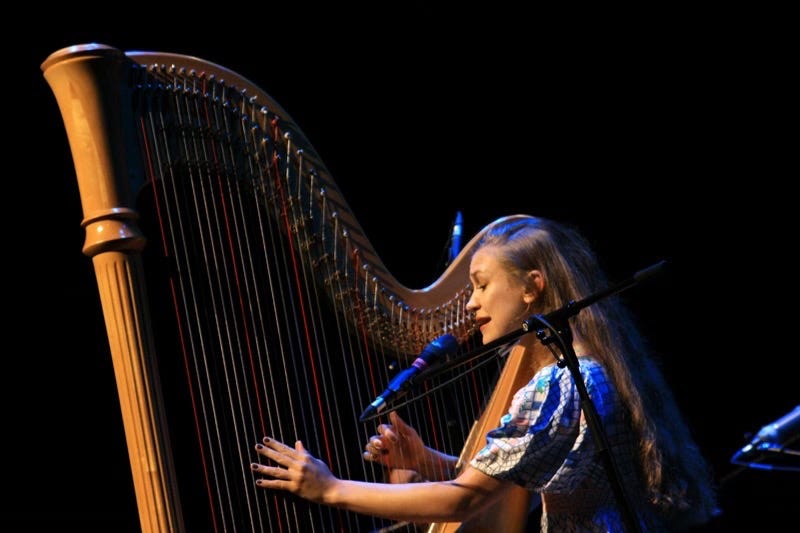
In an excellent episode of his podcast ‘60 Songs That Explain The ‘90s: The 2000s’ Rob Harvilla looks at the unique brilliance of Joanna Newsom through the song Emily, which is a 12 minute ode to Joanna’s sister Emily, an astrophysicist. The episode is a very inspiring, excellently constructed, look at an artist and her work. And I think it has a lot of resonance for what I see as essential - embracing and deepening the way you bring yourself into your work.
He talks about her lyrics, like this one (if I ever wrote a pair of lines as beautiful as these in a screenplay I would probably dance down the street weeping):
The meteorites, just what crosses the light, and the meteors how it’s perceived. And the meteoroids, a bone thrown from the void that lies quiet and offering to thee.
And her voice, of which Rob says:
I am profoundly dissatisfied with any of the words I’ve come up with to describe this person’s voice, so I’m going to do both of us a favor and not use any.
And instead quotes Joanna -
I was so sure that I didn’t know how to sing that I was just going balls out. I was like, I’m going to sing my heart out, as crazy as it sounds, and I’m not going to care because there’s no hope of sounding anything like what people consider beautiful.
I sure as hell wasn’t affecting anything.
I mean, the institution of singing is inherently an affectation.
I’d love to hear more filmmakers talk like that.
2
The human being making the film is really fucking important.
We should be making films so that we are sharing and living and being a part of the world. A film passes through the world, and what it leaves in its wake really matters.
This is maybe THE major theme of how I think about my work and my life.
The concept of work-life balance, to me, is a myth. Your life and your work, as a creative person, are one thing.
If I can’t be a good dad whilst making the film, what’s the point? And if I can’t make films that help us understand ourselves and what we’re doing on this planet, also what’s the point?
After all, isn’t that what differentiates us from Tech overlords? That we value human life, including our own, is actually a dividing line in the world now.
I’d expand this sense of the personal to how we talk about projects too.
We need to reject the elevator pitch and the heavily agent-influenced approach to how we talk about our projects if we are going to find a new model. We need less genre-dependency. Less changing what we are making to respond to a market that nobody understands anyway.
I like how Jane Schoenbrun sees it.
Everyone in hollywood now is like, “i’ve got my new liminal space horror!” ok, i’m gonna go film the fucking alley behind my house and have a liminal horror project, too!
No, i would never have the stamina to make something that’s the corporate version of what i do. i would just get bored and quit.
A more personal way of talking about and sharing your work, at any stage, is better for your film and better for you. After all, an audience is not a homogenous mass. It’s a group of human beings you are trying to connect with.
I had dinner with the scientists I’ve been following for a year, filming their attempts to decode the language of birds. And usually I might have given a more polished or guarded version of what I thought the film I was making would be. And I would have given an understated, simplified story of my past work.
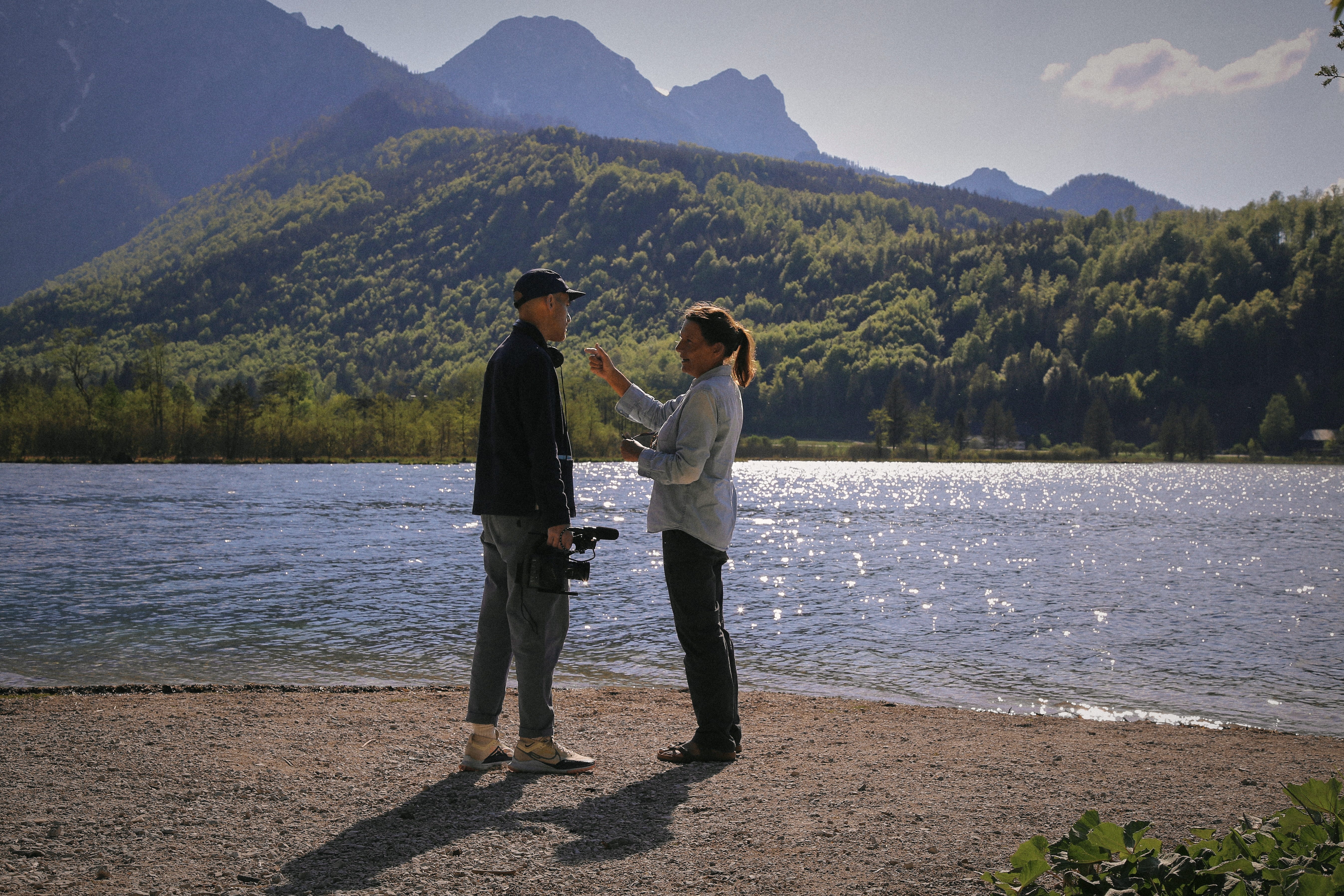
But instead, I talked about a search for beauty, my hopes and doubts for the film and how I wanted it to resonate with people from 8 to 80. How I once scattered the ashes of someone I had made a film about and how this all may be madness, but it’s worth it.
By the end of what I was saying, everyone at the table was listening and felt part of the film.
3
Make all kinds of things.
One artist who I think does a phenomenal job of making distinctive, emotional and personal films that are vibrant and deep cinematic experiences is Hlynur Palmason. One of the things that Palmason does is work across every form and length.
He makes his beautiful features (Love That Remains was my favourite film last year) - but he also makes shorts and installation pieces. Like his short film Nest.
It’s on the Criterion Channel - https://www.criterionchannel.com/nest
It’s an absolutely beaut.
Palmason is folding himself and his family and where he lives into his work. Those are his kids, on his land in Iceland. It’s not a documentary, but it feels absolutely full of real life, of his life. And it feels utterly like a film that only he could have made.
I want my 8 year old daughter to be a part of the films I make. Maybe not in them, but utterly inside them. I showed her some rough scenes from this feature I’m making about people studying the language of birds.
I wanted her feedback, and the perspective of a kid. But I also wanted her to understand what I’ve been making and going on about and buying too many books for. She should be a part of the film, like Palmason’s life is part of his work.
Isn’t that a happier, more evolved way to exist? To create?
The great thing about Nest is that it just feels like the right form. It feels expressive and experimental in the best way.
Are we too focused on features? Should we be making work of all forms and all lengths?
I’m beginning to think that I should, at least. I’ve just relaunched the short series I used to make about artists and their sketchbooks - called Little Scraps of Paper. 90 second documentaries that delve into ideas.
I originally stopped because I felt like I needed to make something feature length to be a serious filmmaker. Now I’m enjoying the joy of making things that are the right length.
4
But don’t call yourself a content creator.
You’re not making fucking content.
We aren’t making work to fill space, we are making work to understand and connect with the world.
I see a lot of people trying to bend to the way things are, rather than bending the way things are to them. As someone who has worked with giant companies in commercials and films, that isn’t going to work. You get subsumed. You disappear.
Yes, make work that plays with the format. Vertical? Sure. Short? Yes! To be watched in any order you like? Definitely. Remixable? Love it.
(Like this Pete Ohs remix project which is pretty fucking great).
Just don’t say you’re making content. As soon as you see it as content, you’re fucked. Content is meant to be consumed and disposed of. YOU are making stridently personal films of any length.
Have something to say and please see yourself as an artist.
5
Be you, and give.
All of this might sound a little self indulgent and self important. But I think it comes with a huge sense of responsibility.
Not only must we strive to be more ourselves, but we must help others do the same.
Let’s actively, not passively, seek collaboration and cohorts of like-minded filmmakers. Watch films. Support wherever you can. Reach out with kind words when you see something that moves you. But do it honestly, not tactically.
None of this works in isolation. It’s part of the reason I take critical thinking and support seriously. Giving good notes at every level to people who ask for them is vital and should be done with attention and time. Bland niceties or attacks have become the norm in our culture. We need to shift that to critical, caring feedback.
And the bonus? Thinking like this helps your own filmmaking! Every time I give feedback on a script or edit, my own craft sharpens.
So maybe we can all lift each other towards being more us.
A bit like Ted does so generously here.
Ok, wonderful humans, that’s more than enough from me. Thank you for reading my HFF TakeOver post - let’s continue the conversation at Little Scraps of Filmmaking. I’m offering a 48 hour flash sale on my newsletter — for the next 2 days, annual subscriptions are 50% off. Use this link:
https://tomasleach.substack.com/HopefullyYou
 | A guest post by
|
This was really beautiful and I enjoyed it immensely. Thank you so much for the encouragement. I think we all need it from time to time.