
Ask E. Jean: "You will see yourself. You will see your sisters. You will see your mother. You will recognize so much of what we all experience... Men too."
A vHopeful Conversation with Emmy-nominated director Ivy Meeropol about her new film

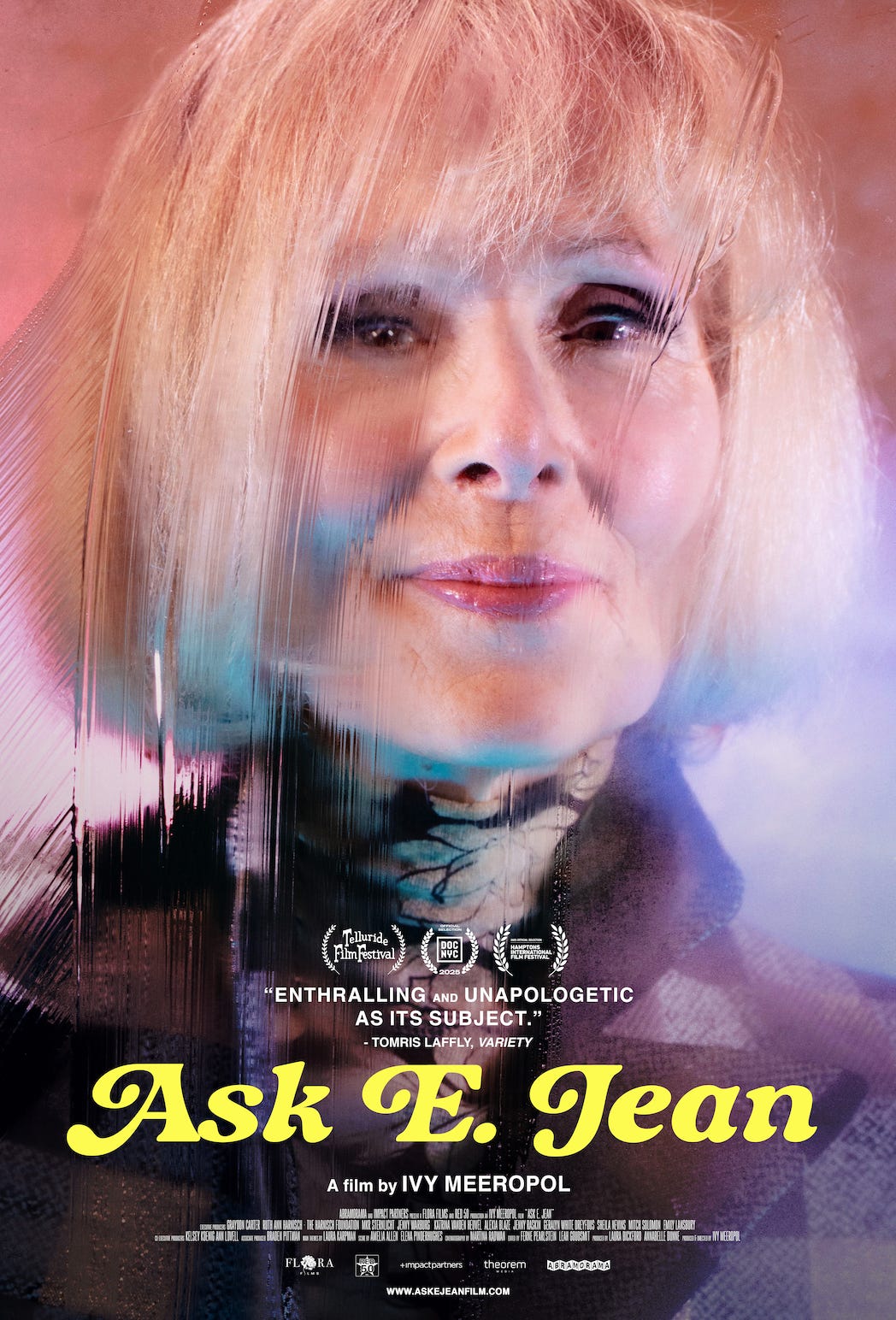
In this vHopeful Conversation, filmmaker Vanessa Hope speaks with Emmy‑nominated documentarian Ivy Meeropol about her new film Ask E. Jean, a portrait of advice columnist and writer E. Jean Carroll that goes far beyond the courtroom headlines to explore her Miss Cheerleader USA past, gonzo magazine career, TV show, and late‑in‑life decision to publicly confront Donald Trump. They discuss the challenge of balancing E. Jean’s buoyant, hilarious persona with the gravity of the assault and its lifelong impact, the complicity and constraints of the boys’‑club media world she navigated, and the transformative power of women’s friendship and lawyering embodied by Carroll’s bond with attorney Robbie Kaplan and her close circle of friends. Throughout, Ivy reflects on how E. Jean’s willingness at 75 to reckon with her past, revise her own advice‑giver legacy, and insist on telling the truth offers exhausted audiences something rare in the Trump era: a story that is both deeply sobering and unexpectedly joyful, galvanizing viewers—women and men alike—to see sexual violence, patriarchy, and American democracy as inextricably linked.
Transcript lightly edited. Podcast available on Dream of a Better World, & Apple, Spotify or wherever you listen
Vanessa Hope: I’m very excited to be joined today by Ivy Meeropol, who is an Emmy-nominated documentary filmmaker whose work consistently explores power, justice, and the intimate lives behind public headlines. She is the director and producer of Ask E. Jean, the award‑winning feature documentary about advice columnist and journalist E. Jean Carroll, the only woman to have beaten Donald Trump twice in court. Her early films include After the Bite, about the explosion of great white sharks and seals on Cape Cod; Bully. Coward. Victim. The Story of Roy Cohn; Indian Point; and her debut, which is super powerful and a must‑see also, Heir to an Execution, a deeply personal exploration of the legacy of her grandparents, Ethel and Julius Rosenberg. Her work has premiered at Sundance, the New York Film Festival, Tribeca and other major festivals. And she is a member of the Academy of Motion Picture Arts and Sciences. Ivy, thank you for being here.
Ivy Meeropol: Thanks for having me, Vanessa.
Vanessa: Before we dive into your incredible film and the life and work of E. Jean Carroll, it seems there were criminal charges filed against E. Jean shortly after your movie appeared in theaters. Is there anything you can say to us about that?
Ivy: Yeah. Well, I mean, the timing is suspicious, I will say that, and I’ll let your audience, you know, connect the dots. But I wrote an op‑ed for the New York Times that came out just before we then premiered the film at the IFC Center in New York City. And then really days after that, it was announced that the Department of Justice was launching a criminal investigation into E. Jean, accusing her of perjury.
You know, of course, I mean, I was horrified when I first heard that, read that, and then just thought it was very consistent with the vindictiveness that emanates from this White House. Other than that, I mean, there’s no grounds. You know, I know E. Jean really well now, and I think the film presents someone who’s incredibly honest—some might say to a fault—but she is herself, she’s honest, and then the evidence speaks for itself. Two juries found him liable. So I think it’s par for the course. This is what he does. And E. Jean really gets under his skin.
Vanessa: It’s beautiful that your film actually opens up all of E. Jean Carroll’s life far beyond the courtroom headlines. You give us her Miss Cheerleader USA days, gonzo journalist, advice columnist, TV host. When you first encountered her New York magazine story in 2019, what was the moment you knew this isn’t just a Trump story, this is a whole life that needs its own film?
Ivy: Yeah. I mean, you know, reading the piece in New York magazine, which was specifically about her career and the assault at Bergdorf Goodman, I was really struck by how she told the story. I mean, her voice. She has such a distinct voice as a writer and she’s just a real character.
So I was really intrigued by that. And then when I started reading more—I honestly didn’t know much about her. Some of my friends were kind of horrified, like, “How did you not know Auntie E, the amazing advice columnist?” I was living in Washington, D.C. at the time, working in politics. I just wasn’t as aware. So I dug in and started reading about her and thought, “She’s not just an advice columnist.” Not that that wasn’t a huge accomplishment—she’s hugely popular—but she was really ahead of her time in a lot of ways.
She was the first female editor at major magazines during the heyday of the magazine world in New York City, and mainly men’s magazines, which is even more interesting—like Esquire, Outside, and Playboy. And she was writing these articles that were typically in the male journalist domain, like Norman Mailer and Hunter S. Thompson and people like that. And then there’s E. Jean Carroll going out and reporting these stories and just, you know, a gonzo journalist. So I was really intrigued by her. I really was.
Vanessa: For me, watching your film, it was the first time I got to see her in her TV show—see her as a television personality—because I knew of her column, but I had never watched her on TV. And I love also listening to her book that works really well with your movie. She reads the audiobook, Not My Type, and it’s a really distinctive voice—razor sharp, funny, and honest, as you said.
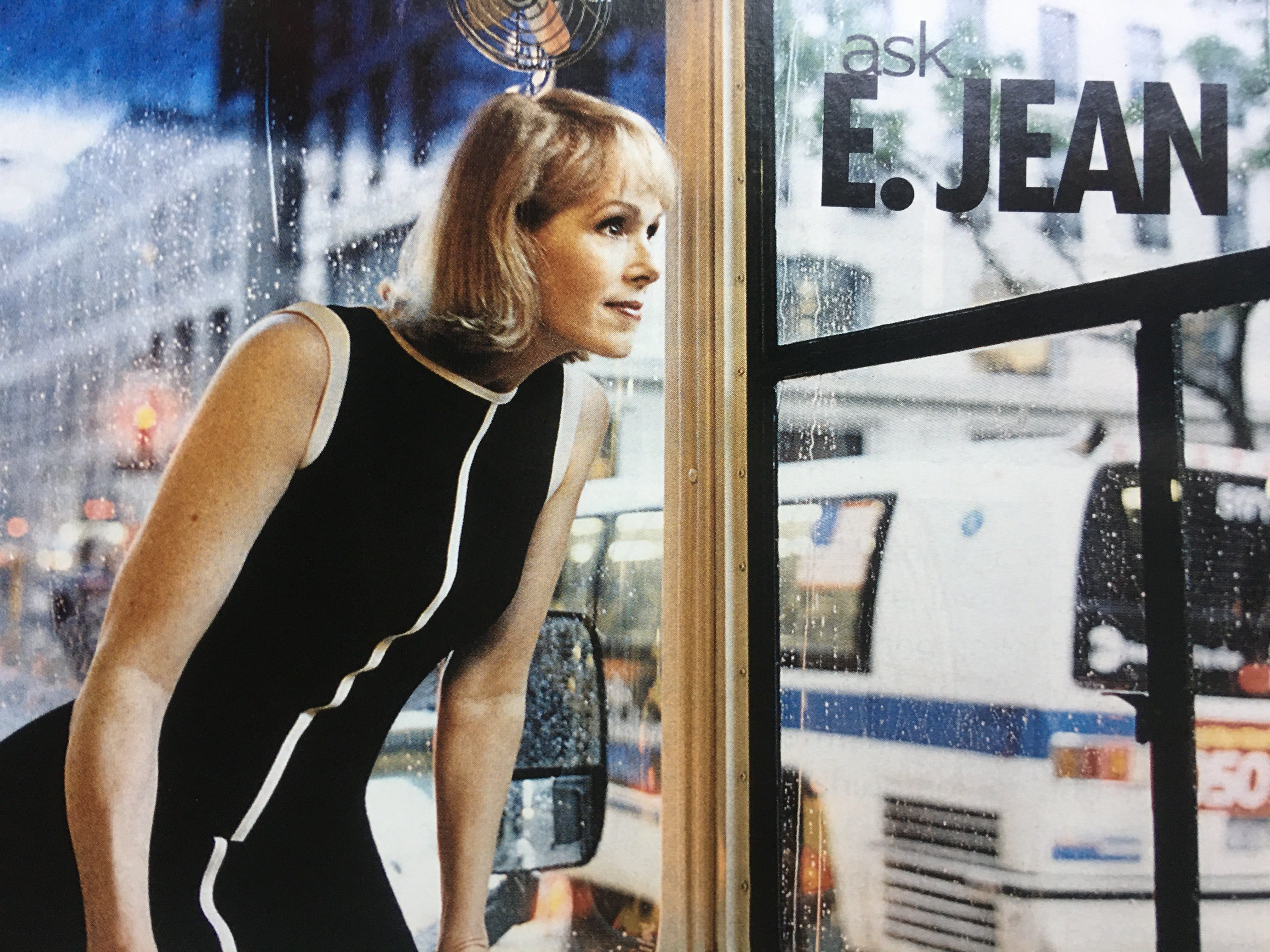
And I wonder when you felt like you could explore, tonally, how—because she talks about how she laughed instead of screamed, like the women of her generation. As a director, how you found the tonal balance, letting her be hilarious and outrageous and herself without trivializing the violence that she survived.
Ivy: Yeah, it’s a really good question. That was the hardest—that’s really the hardest part about making this film, other than, you know, raising the money and all the other things that we do. Once we had all this amazing material—which includes, like you said, her television show, which she was shooting over a three‑year period, the period when she ran into Trump at Bergdorf Goodman—so you really get to see her and know her during that time. It’s just an incredible archive for us to use.
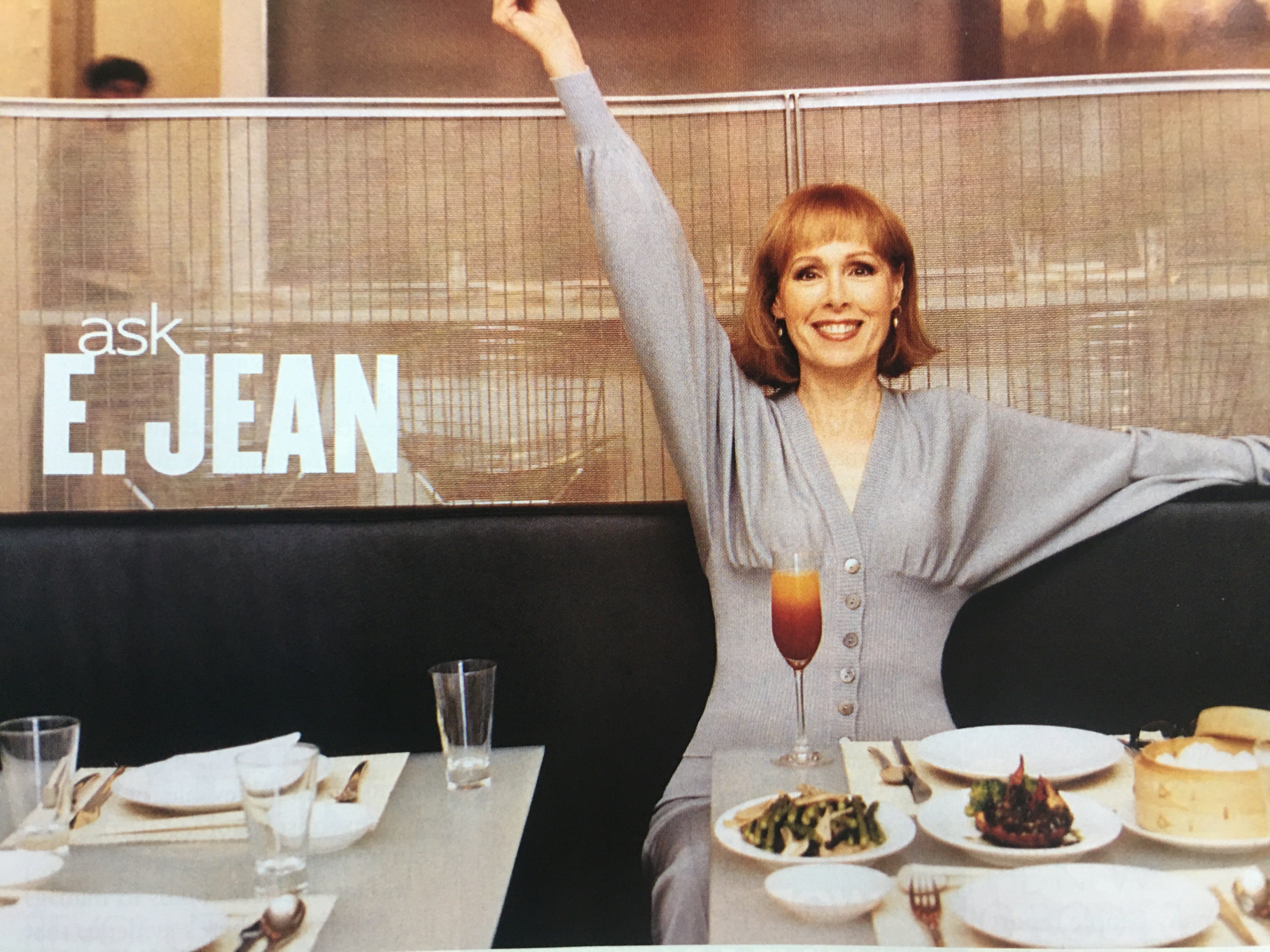
It was hard because E. Jean herself is so buoyant and full of bravado. She’s always “Everything is fantastic!” She’s the cheerleader, right? She was a nationally ranked cheerleader. So how do you balance that, because not everything is okay, you know? We were really fortunate because I was able to use the video depositions. You don’t get more serious than that. She’s being deposed by Alina Habba, Trump’s attorney, and it is really serious. She has to focus and be honest and tell her story without all the colorful exclamations that she makes typically.
I didn’t ever interview her, Vanessa, directly about the assault. I was fortunate in a way, because I also didn’t have as much time with her as I had hoped. Luckily, I had focused early on everything else in her life and telling those stories. But I have to say, we put this film together in the edit room. It is a painstaking process of finding those moments with her that we feel are revealing and are fun, but keeping them kind of siloed.
So you notice in the film how we go through different periods of her life: we use different music, different pacing, than when you are with her talking about the assault. And it’s not just the assault by Trump; it’s about the cumulative effect in her life of what that assault did to her and other experiences with men. There’s a revelation in the film that after age 52 she never has sex again, and it’s really heartbreaking because she’s discovering this about herself in real time. We’re watching it in the depositions because things were so buried.
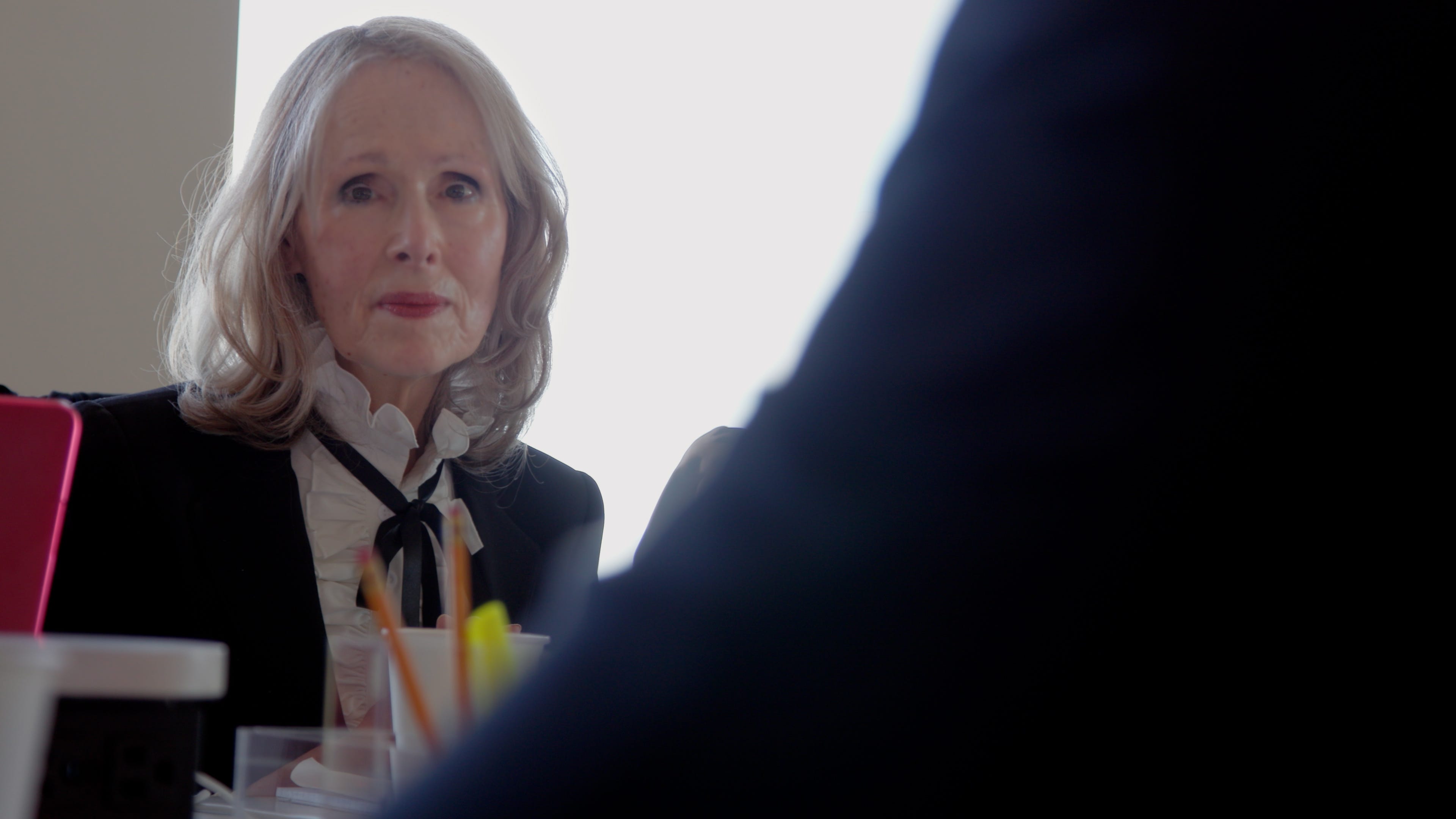
So in that sense, we were able to—once you’re in that mode and you’re not hearing her fun writer voice anymore, which is what was so intriguing in that original piece in New York magazine. I thought, I’m so entertained by this story, but it’s horrifying. That’s kind of her special ability. But yeah, it was really hard. And it was also hard to balance how much Trump should be in there. He is the villain in this story, but we didn’t want him to dominate either.
Vanessa: You really manage a brilliant tonal balance. It’s so powerful and, I think, inspiring for women to see how E. Jean can face the music in this serious way, and that her humor gives her resilience and also gets her—and everyone else—through and up.
You mentioned that she was in this world of magazines—Esquire, Playboy, Outside, Elle—into this post‑Me Too Trump moment. What did you discover about how those media worlds shape what women are allowed to say, and how that history shows up in E. Jean’s own reckoning with what happened to her?
Ivy: Well, I would say, you know, it’s interesting because she has this great kind of Mary Tyler Moore story about who she is. She does all the “girl things” when she’s younger—she’s a sorority sister, a beauty queen, a cheerleader, married very young—but she keeps writing. And the minute she gets this big story, and she was already in her early thirties, she left Montana and started her life completely anew and had no connections. So there’s this sense of: wow, she is an independent, powerful woman.
There she is on TV in her pantsuits, and she’s telling women they don’t need to be married at 30 and giving really great advice. But at the same time, she had to be part of the boys’ club. And we know how that can really tear you apart ultimately, because you are accommodating so much. You are, and it can put you in terrible situations as well.
I think that’s a big part of it. She was very proud to be at the boys’ table. She literally was at the writers’ table at Elaine’s on Thursday nights where all the big‑shot writers were. And what does that do? Roger Ailes gave her her television show, and we know what happened with Roger Ailes. But she managed to kind of turn the tables on Ailes in a way—she would tease him and kind of, you know, push back. I was fascinated by that.
Then that leads into the Me Too era where it’s like, okay—and E. Jean’s realization that all of that accommodating… She has said to me, and this didn’t end up in the film but I think it comes through: you still don’t get the promotion, you still don’t get the reward. All of that effort.
Vanessa: Robbie Kaplan is a vivid presence in your film. She’s like a legal counterpart to E. Jean’s voice—sharp, impatient, relentless, inventive. What did you want audiences to understand about their partnership, and maybe more broadly how women’s storytelling and women’s lawyering intersect in this case?
Ivy: Yeah. It’s interesting. One of the things I love about making documentaries is that you discover your themes as you’re making the film. I didn’t know at all what I would be walking into. Remember, when I first started talking to E. Jean, she hadn’t even gone to court yet, never mind win twice and everything else that’s happened.
What I saw was a true friendship and caring that goes beyond attorney and client. I think that’s part of why they were so successful. It wasn’t just Robbie; there were other attorneys on the team, and they just adored E. Jean, and she adored them. And like you mentioned, if you read her book Not My Type, which I really recommend—and listen to it, she does the audio recording, it’s fantastic—the way she talks about her team, they’re like her kids. I think that’s beautiful.
So the film started to become about female friendship. Not just Robbie and E. Jean, although that’s a central one, but Robbie and Lisa Birnbach; E. Jean and Carol Martin—her two closest friends at the time, who were her outcry witnesses, which means they were the only people she told, over 25 years ago, what happened with Trump. And then they were willing, very nervously, reluctantly, to come forward and speak out for her and testify.
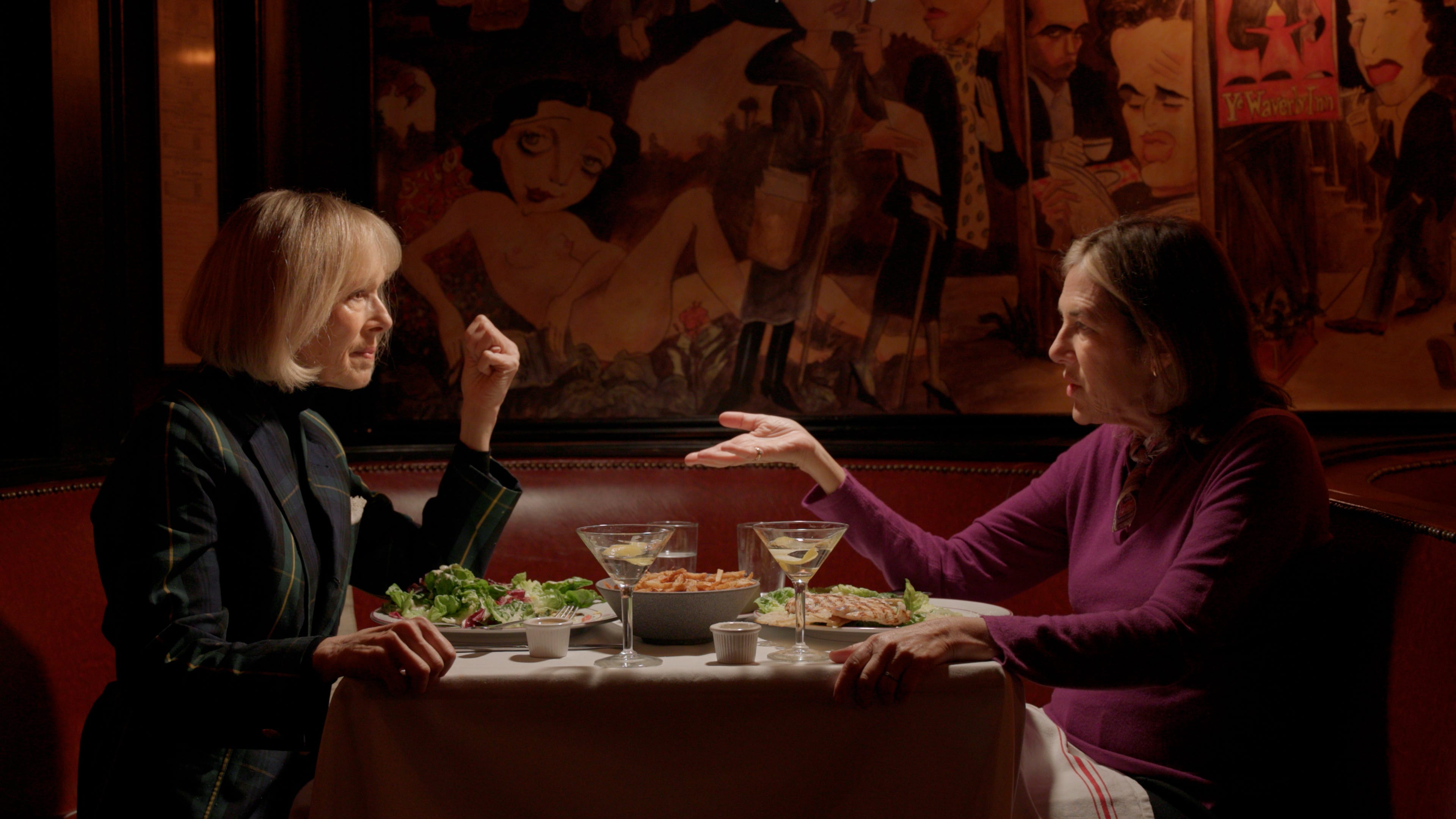
That’s why I shot them having those lunches together, because I wanted us to have that feeling that we’re listening in on friends having a conversation. I just thought, okay, this is powerful. When E. Jean says that when she came out with her story, she started hearing from all these women who were saying, “E. Jean, what should I do?” and she’s helping them—that’s what women do for each other. It’s really powerful. To me it gives us something that we can actually work on and continue. It gives us hope that we can stand up to the bullies and win. If you’ve got a group of women—if you have E. Jean and Robbie Kaplan coming together—I mean, some kind of magic happened there.
Vanessa: Yeah, some magic. It’s great. You start to feel her posse of female friends and how supportive they all are of each other, and what a difference that makes, coming from that boys’ club, as you said.
Ivy: Yes. And I wonder, you know, E. Jean may even not have known such close friendships before.
Vanessa: You’ve spoken about wanting viewers not just to believe E. Jean, but understand her across time, across these bad cultural scripts, across her own coping mechanisms. Was there a specific scene or interview moment where you felt that understanding snap into place for you as a filmmaker? For some reason now I’m picturing her in her cabin in the woods. There’s a level of threat she has dealt with since fighting back that is, I think, beyond what most of us can imagine. But I wonder what you felt really helped crystallize her for you.
Ivy: Yeah, I mean, there’s a few moments. I think there are two things to talk about here. The first part of your question is: I will say that when she started saying that she hated all of the advice she gave—when she started telling me that. She hadn’t said that publicly. We would have these interesting conversations because I was already starting to watch the 25 episodes I managed to get hold of of the Ask E. Jean show. So I was saying, “Well, you’re actually giving some great advice, you know? You’re giving advice, and that’s why you were so popular—because it was when women wanted and needed to hear that.”
But at the same time, you know, it’s a mixed bag. You see that in the Geraldo clip where she, some would say, victim‑shames Paula Jones and Anita Hill. Her ability to reckon with her past that way and to talk about it very frankly, and just to say, “I didn’t even think about patriarchy, I didn’t think about…”—that was a moment where I thought, this film is bigger than Carroll v. Trump. And it’s bigger than E. Jean. It’s illuminating for all of us who recognize it, and also for younger people who need to know that this is what happens.
And then the other part of your question—she calls it “the hovel”—it’s a tiny cabin in the woods, but that’s how she’s lived for a long time. As much as she’s the New York City part of the film and the early part of her story—she loves New York City, she’s in the city all the time—she really likes living like that. It was scary for a while, and I know people in her close circle really wished she would live somewhere else. But E. Jean’s not going anywhere.
Vanessa: It’s so true what you say about her ability to reckon with her past and evolve. What if our leaders could actually do that? Be responsible, be held accountable as they’re being brave and putting themselves out there, because it’s not easy. She’s like my mom’s generation, and it’s scary to think about how we make progress when we are up against these obstacles and we might make mistakes. But you have to be okay not being perfect, as long as you can reckon with the truth in your past.
Ivy: Yeah, exactly. And I think that’s why it’s really meaningful to me to have had the opportunity to tell the story of someone—she was 75 years old when she came forward with this. That’s beautiful. Why not? Now she’s had this whole other life experience and look at what she’s accomplished.
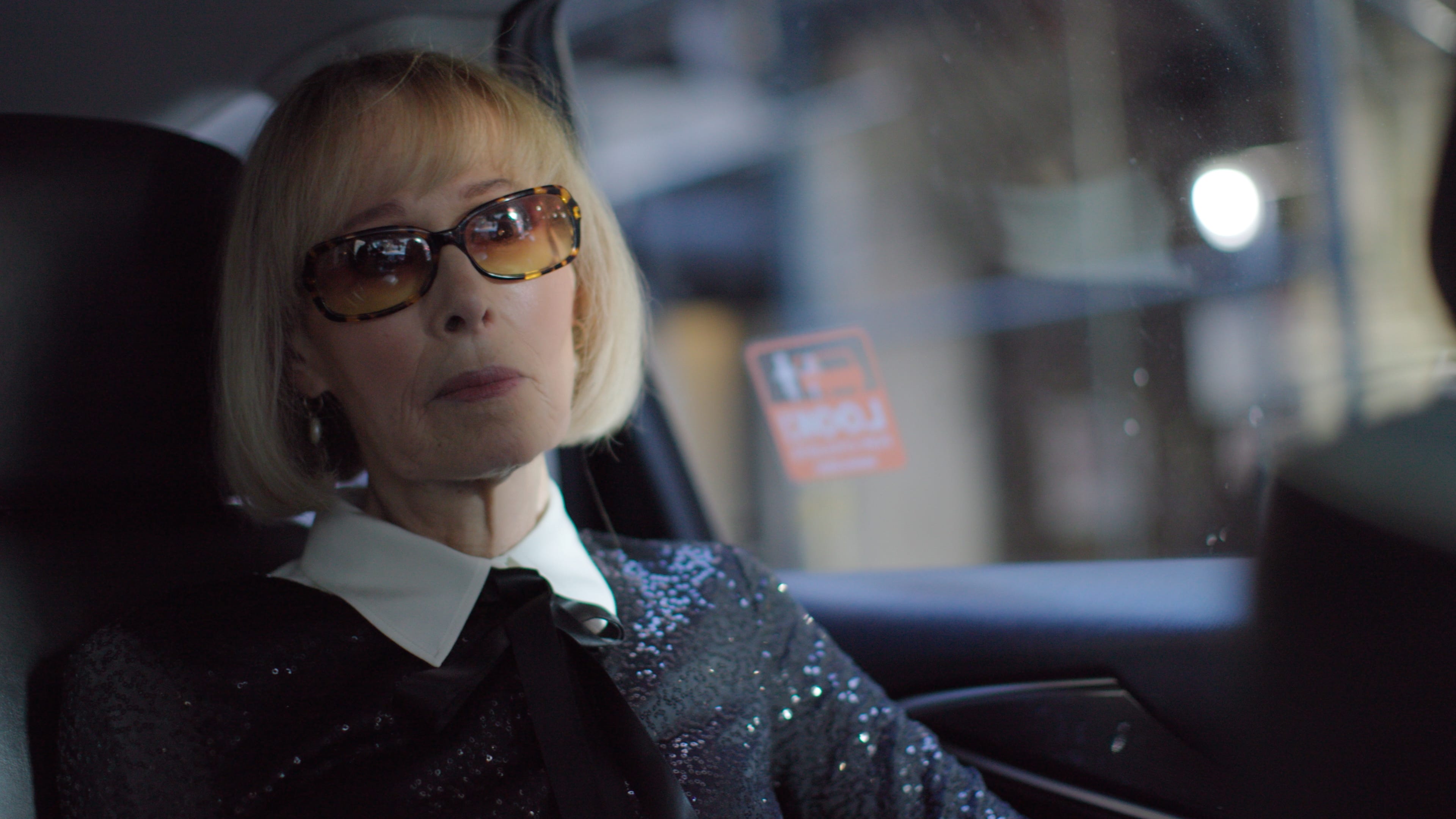
Vanessa: This film is a big success, screening in theaters nationwide right now. It’s played the festival circuit, really powerfully moving audiences. I’ve been in some of them—at Middleburg Film Festival, it was really great. Are you finding people are exhausted by Trump—by his litigiousness, his lawsuits, by the relentlessness of his administration? And is E. Jean giving them something emotionally and politically that we can’t find anywhere else right now?
Ivy: I think she is giving people something. That’s why it’s having such an impact. When I introduce the film, I’ve been saying—it’s what we were talking about before—who E. Jean is is completely the reason why she’s the person who went all the way and took him on and beat him. But it’s also what gives us hope.
So I introduce the film, I say: there will be some really graphic descriptions of very painful things. Obviously, you know what you’re coming to see—most people do. But I also want you to remember that, as E. Jean would say, this film and her story is a “glorious romp,” or something like that. She wants you to laugh. I want you to laugh. I welcome you to laugh. That’s who she is.
I think it’s really having an effect. We are exhausted. We’re exhausted by the sour, miserable… it’s just relentless. We can’t even believe it—we’re looking at so many awful things. So to have this woman who is just like, “You’re not going to scare me,” and to keep going and say, “This is what happened,” and to have had the opportunity because the Adult Survivors Act is so important. I didn’t get into it in the film because it was this whole complicated tangent, but she was able to file charges against him for sexual assault because there was this one‑year look‑back window and New York passed that law. Normally she would never have been able to do that.
I think people come out of the theater really galvanized. They’re talking to each other in very intense ways. A friend of mine said they had been at one of the screenings at IFC Center, a matinee; it was full and everyone sat through the whole credits, which never happens except for super cinephiles or someone looking for their name. They sat through the whole credits and then they were talking amongst themselves to the point where the ushers had to shoo them out.
So that’s what we want. I feel like this is a real communal act—seeing this film together really gets people charged up. They want to know what else to do to help get the film out, during the Q&A. It’s completely galvanizing.
Vanessa: People shouldn’t be afraid of what they’re going to see in the film because you have this incredible person at the center of it. It is uplifting and inspiring. I hope people understand that in whichever way you look at Trump as a leader in this country—who is not for democracy, who is not for the people, who is entirely corrupt—at the basic foundational level of it all, if you’re not going to treat the other half of the population equally, if you’re just seeing women as completely less than, we are never going to get there as a democracy. That is the basic truth. E. Jean’s life is showing you what has happened here in this country. People wanting to understand us as a democracy need to see this film and tie it together. E. Jean matters because all women in this country matter to the existence of our democracy. It’s like a joke—our 250th anniversary coming up, you know, with this wrestling match on the front lawn.
Ivy: I know. I agree. What’s great is that E. Jean is not an expected heroine in this role either. That’s what’s also beautiful to me. I grew up with all this stuff, and my mother, who died some years ago, would be around E. Jean’s age, and very different. I think it’s really remarkable. I think it’s a story that so many women—who might assume they would never have anything in common with the woman who’s going up against Trump—need to look, watch the film. You will see yourself. You will see your sisters. You will see your mother. You will recognize so much of what we all experience.
Vanessa: Yes. And men really need to see it too.
Ivy: Definitely. Definitely. It is a powerful, important story. I’ve been really heartened by a lot of the men who’ve been coming to the screenings and who’ve been really moved and asking great questions.
Vanessa: Great. Well, thank you so much for taking the time. I know you’re busy and running around the country doing these screenings and Q&As and interviews. It was really great to have you.
Ivy: Thank you for having me, Vanessa. If you go to
AskEJeanFilm.com
you can see all the screenings, and we’re getting booked at more and more cities across the country, which is really exciting. We’re in New York City, we’re in Los Angeles, I’ll be in the Bay Area showing the film. So please, you know, come see us wherever we are.
Vanessa: Yes, definitely. And we’ll put all the details in the post. Thank you again!
Ivy Meeropol - Director/Producer
Ivy Meeropol is the director of ASK E. JEAN, a feature documentary film about the advice columnist and journalist E. Jean Carroll, the only woman to beat Trump twice in court. Her previous feature documentary AFTER THE BITE, about the explosion of great white sharks and seals on Cape Cod, premiered to great acclaim July 2023 on HBO. She premiered her HBO documentary ROY COHN: BULLY, COWARD, VICTIM at the 2019 New York Film Festival and in 2020 the film was nominated for an Emmy for Outstanding Historical Documentary. She was the Senior Story Producer on the CNNFilms documentary THE END: INSIDE THE LAST DAYS OF THE OBAMA WHITE HOUSE, which premiered at the National Archives in Washington, DC, and was one of the highest rated of CNN’s original films. She directed and produced the feature INDIAN POINT, about an aging nuclear power plant close to New York City, which was honored with the Frontline Award for Journalism in a Documentary Film and aired on NHK during the anniversary of Fukushima in Japan. Ivy created and directed the nonfiction series THE HILL (Sundance Channel), about Congressman Robert Wexler (D-FL) and his young staff (nominated for best series by the International Documentary Association). She produced the feature documentary MUSEUM TOWN, which premiered at SXSW, and has produced and directed for the Emmy Award winning climate change series YEARS OF LIVING DANGEROUSLY (National Geographic) and for DEATH ROW STORIES (CNN), Executive Produced by Alex Gibney and Robert Redford. Ivy’s debut film, HEIR TO AN EXECUTION (HBO), explored the legacy of her grandparents Ethel and Julius Rosenberg. It premiered at Sundance and was shortlisted for an Academy Award. Kenneth Turan, of the Los Angeles Times, called it, “An exceptional documentary... a compelling emotional narrative laced with explosive political material.” Ivy was a Sundance Institute Fellow and has been awarded grants from the Sundance Documentary Fund, the NY State Council for the Arts, and the MacArthur Foundation. She is a member of the Academy of Motion Pictures Arts & Sciences.
